Keyword research and negative keywords
List the searches that show buying intent, such as a service plus a city, and group them into tight ad groups. Negative keywords block searches for jobs, free versions and unrelated terms that waste budget.
Get Google Ads management for leads: campaigns on Search, Shopping, YouTube and Performance Max, conversion tracking for every call and form, and a landing page that matches each ad. With a good landing page, ads can bring leads in days, while SEO grows over 3 to 6 months. Design, landing pages, tracking and campaigns are handled by 1 team, with a report every month.
Updated 27 October 2026
| What you get | Campaign setup and management, keyword research, ad copy, landing pages, conversion tracking, monthly reports |
|---|---|
| Campaign types | Search, Shopping, YouTube, display and remarketing, Performance Max |
| Timeline | Ads plus a good landing page can bring leads in days |
| Ad budget | You set it, and Google bills your account directly for clicks and views |
| Who it suits | Service businesses that want enquiries, online stores that want sales, and new businesses without search rankings yet |
| To start | Your offer, the areas you serve, a monthly ad budget and access to your website or Google Ads account |
A campaign needs 4 things to bring leads: the right searches, a clear ad, a page that matches it and tracking that shows what worked. The work below covers all 4.
List the searches that show buying intent, such as a service plus a city, and group them into tight ad groups. Negative keywords block searches for jobs, free versions and unrelated terms that waste budget.
Write ads that repeat the search, state your offer and give a reason to click. Sitelinks, callouts and call buttons are added so the ad answers more questions before the click.
Send each ad group to a page that names the searched service, states the offer and puts a form or call button near the top. Pages are built by the same team that runs the ads, so changes after a test go live fast.
Record calls, form submissions, bookings and purchases as conversions in Google Ads. Bidding can then aim at enquiries and sales, and you see which keywords bring them.
Start with the type that fits your offer: Search for services, Shopping for products, YouTube for video, display and remarketing for past visitors. Performance Max and other types are added once the first campaign has data.
Search terms, bids, budgets and ads are reviewed as data comes in, and budget moves to what brings enquiries. Each month you see spend, conversions and cost per conversion by campaign.
Each Google Ads campaign type reaches people at a different point before they buy. The table shows what each type suits, the intent behind the click and what you need before launch.
| Compare | Search | Shopping | YouTube | Performance Max |
|---|---|---|---|---|
| Good for | Service businesses that want calls and form enquiries | Online stores selling physical products | Reaching people before they search, and showing a product in use | Advertisers with working conversion tracking who want 1 campaign across Google |
| Where ads show | At the top and bottom of Google search results | The Shopping tab and search results, with product image and price | Before, during and next to YouTube videos | Search, Shopping, YouTube, display, Gmail and Maps, from 1 campaign |
| Buyer intent | High: the person typed what they want | High: the person is comparing products and prices | Lower: the viewer came to watch something else | Mixed: Google picks the placement for each ad |
| Main controls | Keywords, match types and negative keywords | Product feed titles, prices and product groups | Audiences, topics and the video itself | Goals, budget, assets and audience signals, with less control over placements |
| What you need | Keywords, ad copy and a landing page for each service | A Google Merchant Center account and a product feed | A video ad and a page for viewers who click | Conversion tracking, plus headlines, images and video for the ads |
| Speed to results | Leads can start in days with a good landing page | Sales can start once the products in the feed are approved | Slower, as viewers often need more contact before they buy | Needs a learning period while Google tests placements |
| Watch out for | Broad keywords that spend on unrelated searches | Feed errors and disapproved products | Views that do not lead to site visits | Spend on low-value placements, with limited detail on where ads ran |
Start with Search if you sell a service and with Shopping if you sell products, then add YouTube or Performance Max once tracking shows which clicks turn into customers.
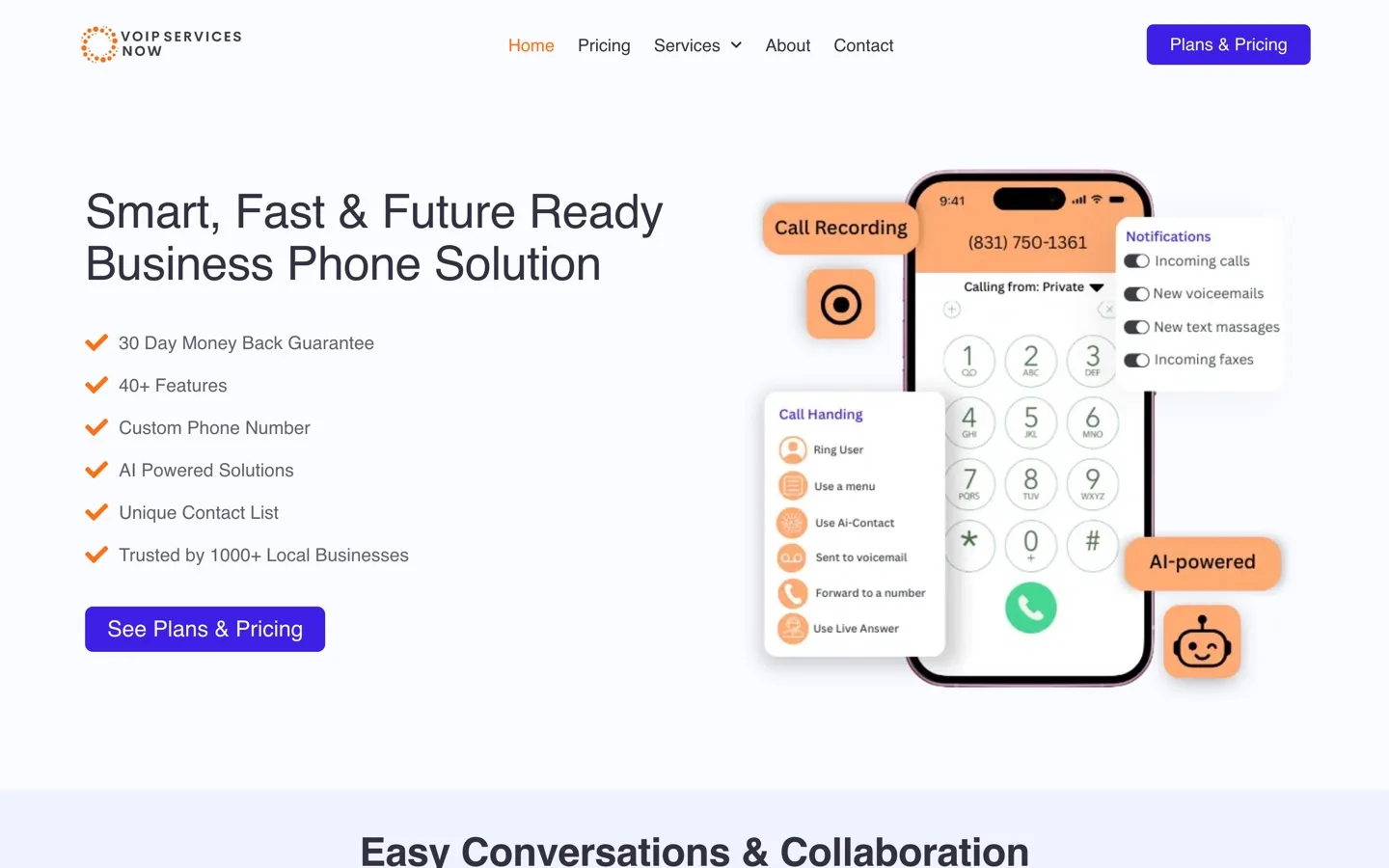
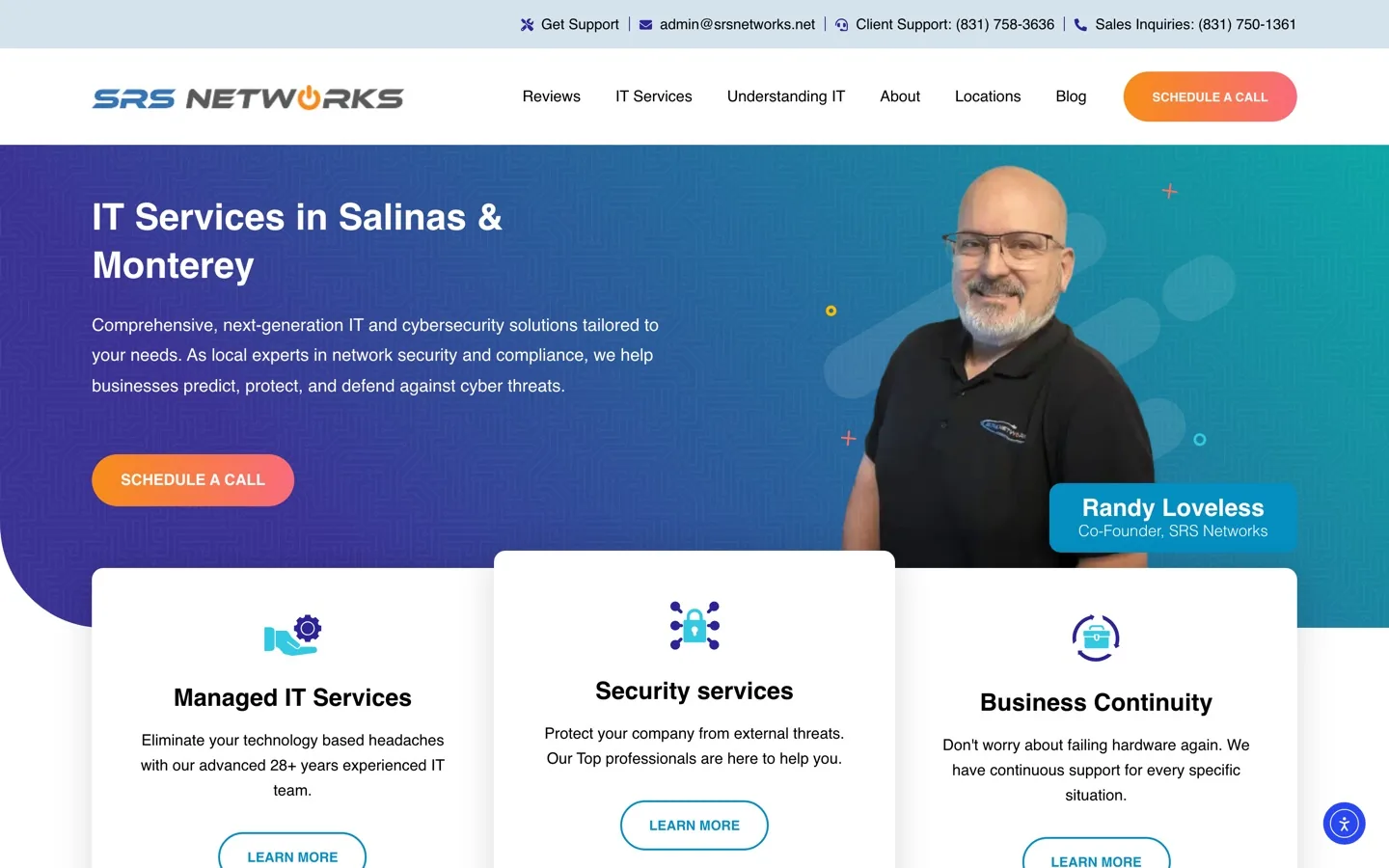
These case studies show the conversion pages that ad clicks are sent to; no ad results are published. The VoIP Services Now site has quote forms on every commercial page, a pricing page with 3 plans, a comparison table and plan buttons that open signup forms in place, and city pages that each carry their own quote form. Every SRS Networks service page ends in a booking form, with Schedule a Call as the 1 primary action across the site and support routes kept apart from sales.
Tracking and the landing page are ready before the first ad runs, so every click can be measured.
You share your offer, the areas you serve and your budget, and a quote follows the call.
Conversion tracking for calls, forms and sales is set up and tested before launch.
Keywords are researched, grouped into ad groups and paired with negative keywords.
A page is built or adjusted to match each ad group, with the form near the top.
Ads go live, then search terms, bids and budgets are adjusted as data comes in.
You see spend, conversions and cost per conversion by campaign, plus the next changes.
You pay for 2 things: your ad budget, which Google bills to your account, and the management work. The management quote follows the free 15-minute call.
Benni Klein, Owner, Accessible Trip Brazil
Yes, when people search for what you sell and you can track which clicks become customers. Tight local keywords, a landing page that matches the search and conversion tracking show you the cost of each lead as data comes in. It is a poor fit when very few people search for your service; then social media ads or SEO may suit you better.
Ads plus a good landing page can bring leads in days. Ads start to show once Google approves them, and calls or forms follow as clicks arrive. Bid strategies that learn from conversions need more time, so the first weeks are spent gathering data.
Spend enough to get a steady flow of clicks on your main keywords, which depends on the cost per click in your market. Keyword research before launch shows estimated bids for each keyword, so the budget is set on data. Start with a small set of keywords and raise the budget once the cost per lead is clear.
The cost depends on how many campaigns and campaign types you run, how many landing pages are needed and whether tracking must be built. Your ad budget is paid to Google and is separate. Rizer has no price list; you get a quote after the free 15-minute call.
Use Google Ads when you need leads now and SEO when you want traffic that keeps coming without paying per click. Ads plus a good landing page can bring leads in days, while SEO grows over 3 to 6 months. You can start with ads, build SEO alongside and move budget as organic traffic grows.
Yes, in most cases, because a page that matches the ad gives the visitor what they searched for and 1 clear next step. A homepage serves every visitor at once, so the searched service and the form are harder to find. Google also rates landing page experience as part of Quality Score, which affects what you pay per click.
It can be, once conversion tracking records real leads; without that, Performance Max aims at whatever it can count. It runs across Search, YouTube, display, Gmail and Maps from 1 campaign, with less control over where ads show. A safe order is to start with Search, then test Performance Max when you have conversion data.
Yes, an existing account is audited first. The audit looks for search terms that spent money without results, missing negative keywords, conversion tracking that counts the wrong action and ads sent to the wrong page. Fixes are then made in order of how much budget each problem wastes.
Share your offer, your area and your budget. A campaign plan and a quote follow the free 15-minute call.