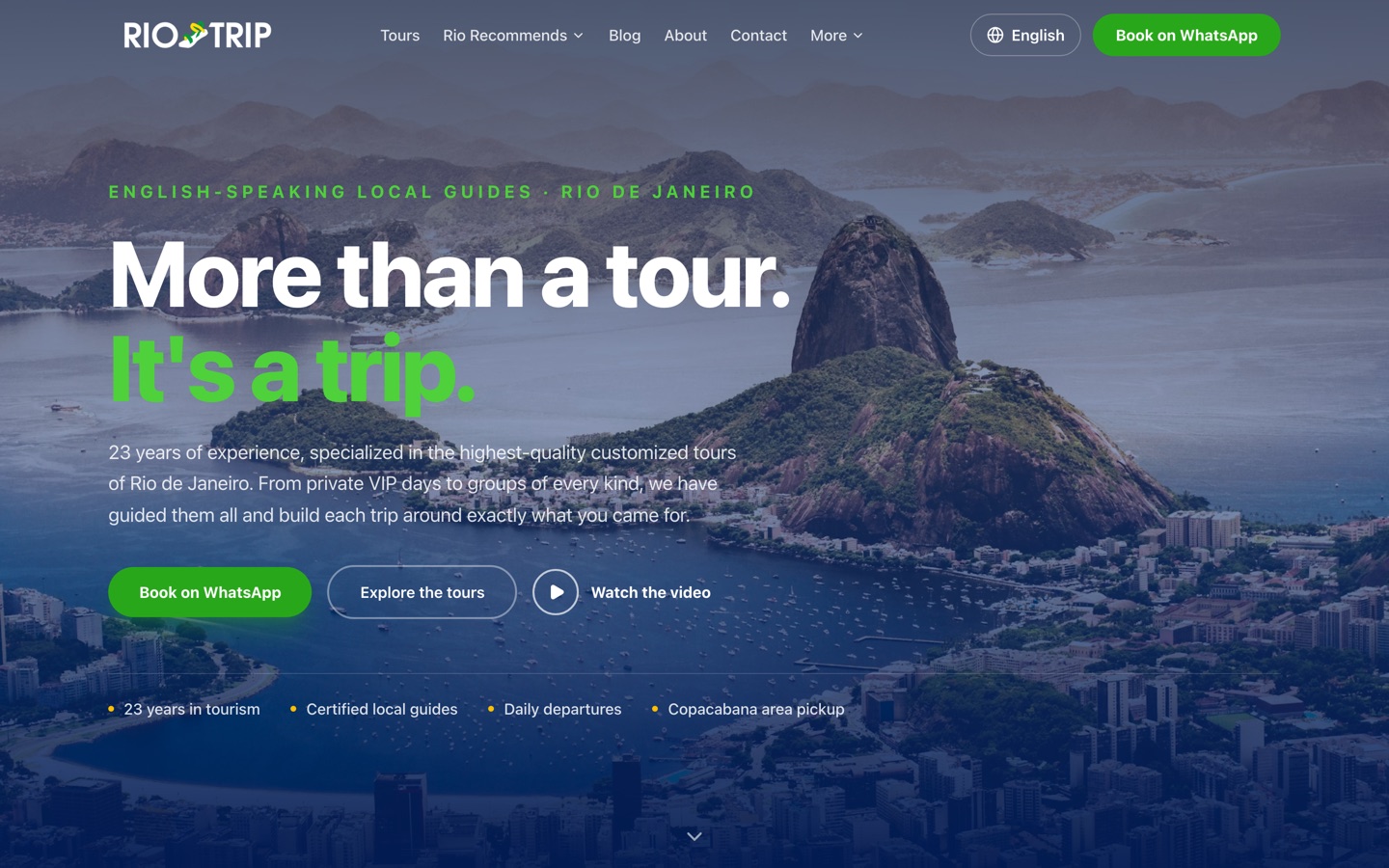
A dated first impression
The design and performance felt years behind the company's actual capabilities, undercutting trust before a single conversation.
A 28-year California IT provider running an early-2000s website. We rebuilt the whole digital presence, and 6 months later they reported roughly 3× the visitors.
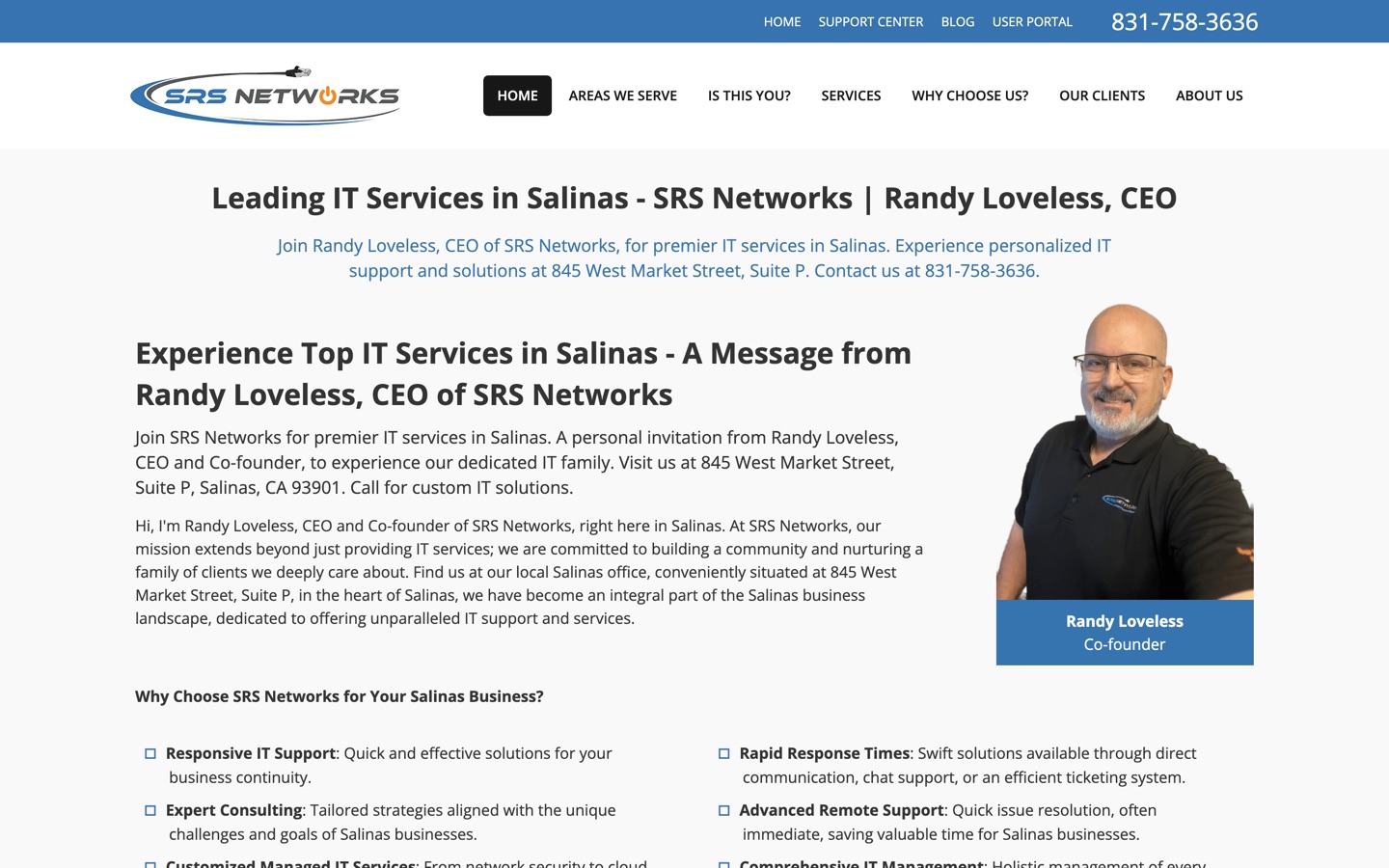


15 pieces of the build, every one a real page from the live site.
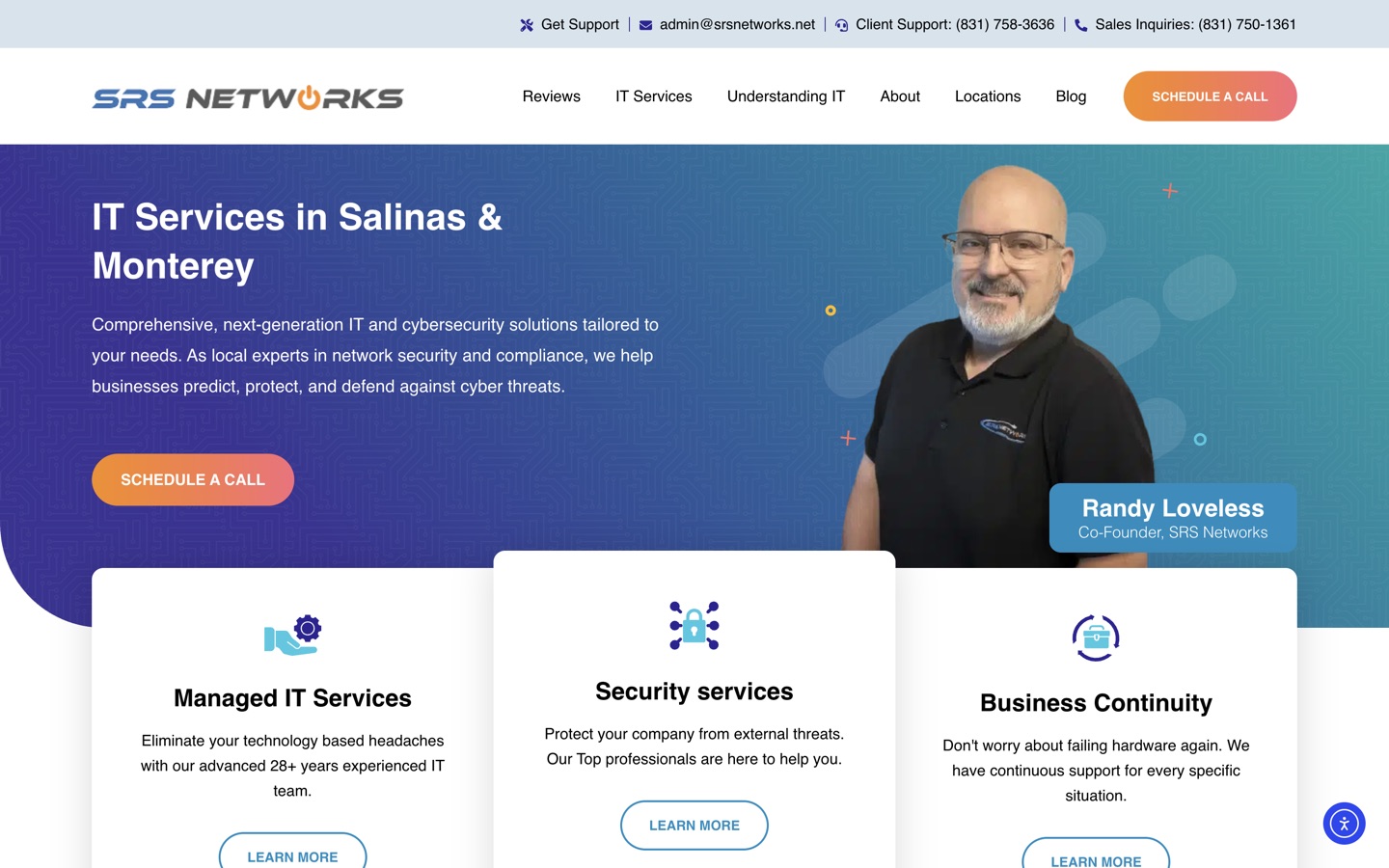
A location-led hero naming Salinas and Monterey, the founder present above the fold, and 3 scannable service cards. The company reads as the established provider it already was.
6 categories replacing an unstructured catalog
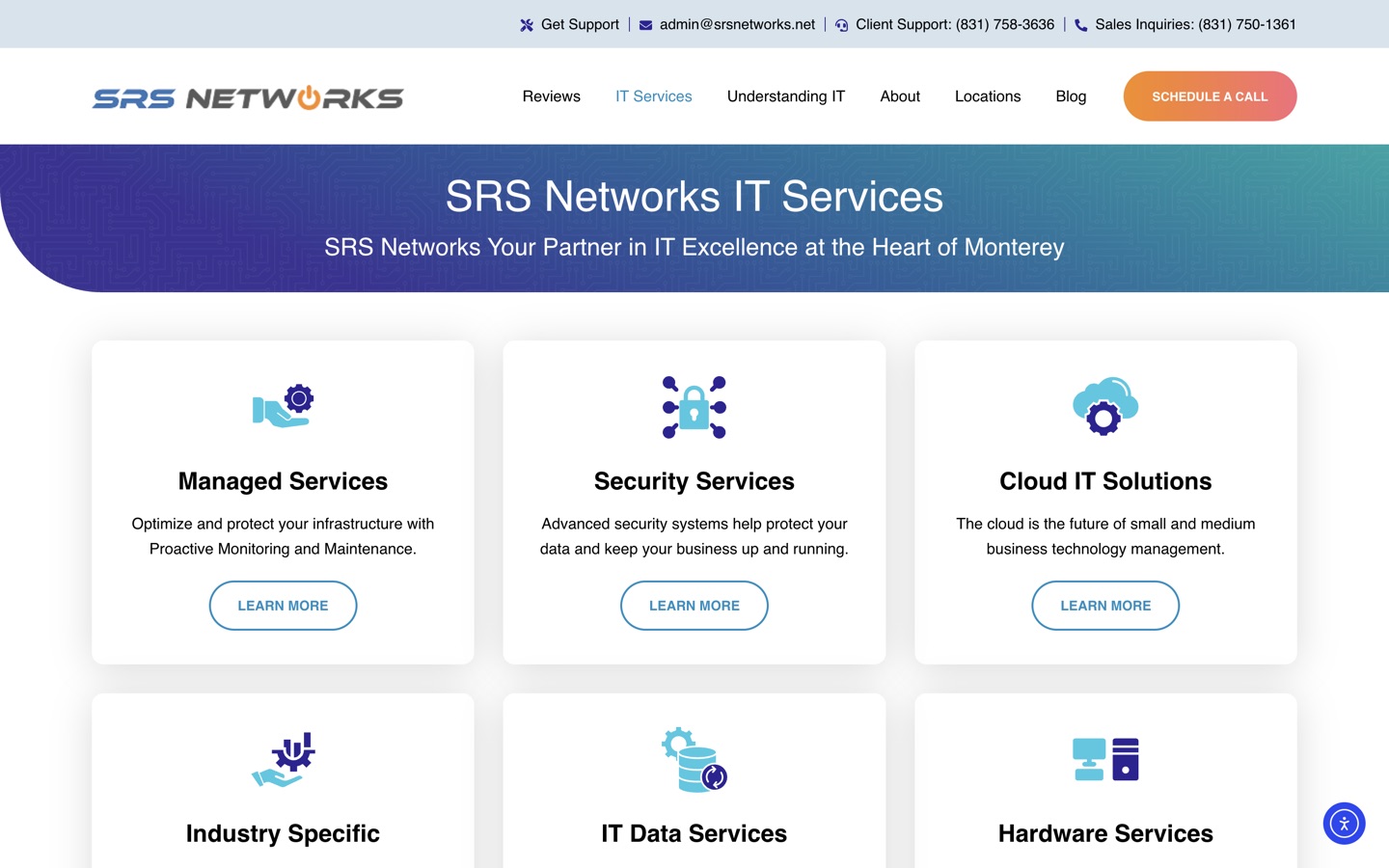
Roughly 60 services collapsed into 6 categories a business owner recognises: Managed IT, Security, Cloud, Hardware, Software and Business Communication. Structure came before design.
1 hub, 6 clear routes
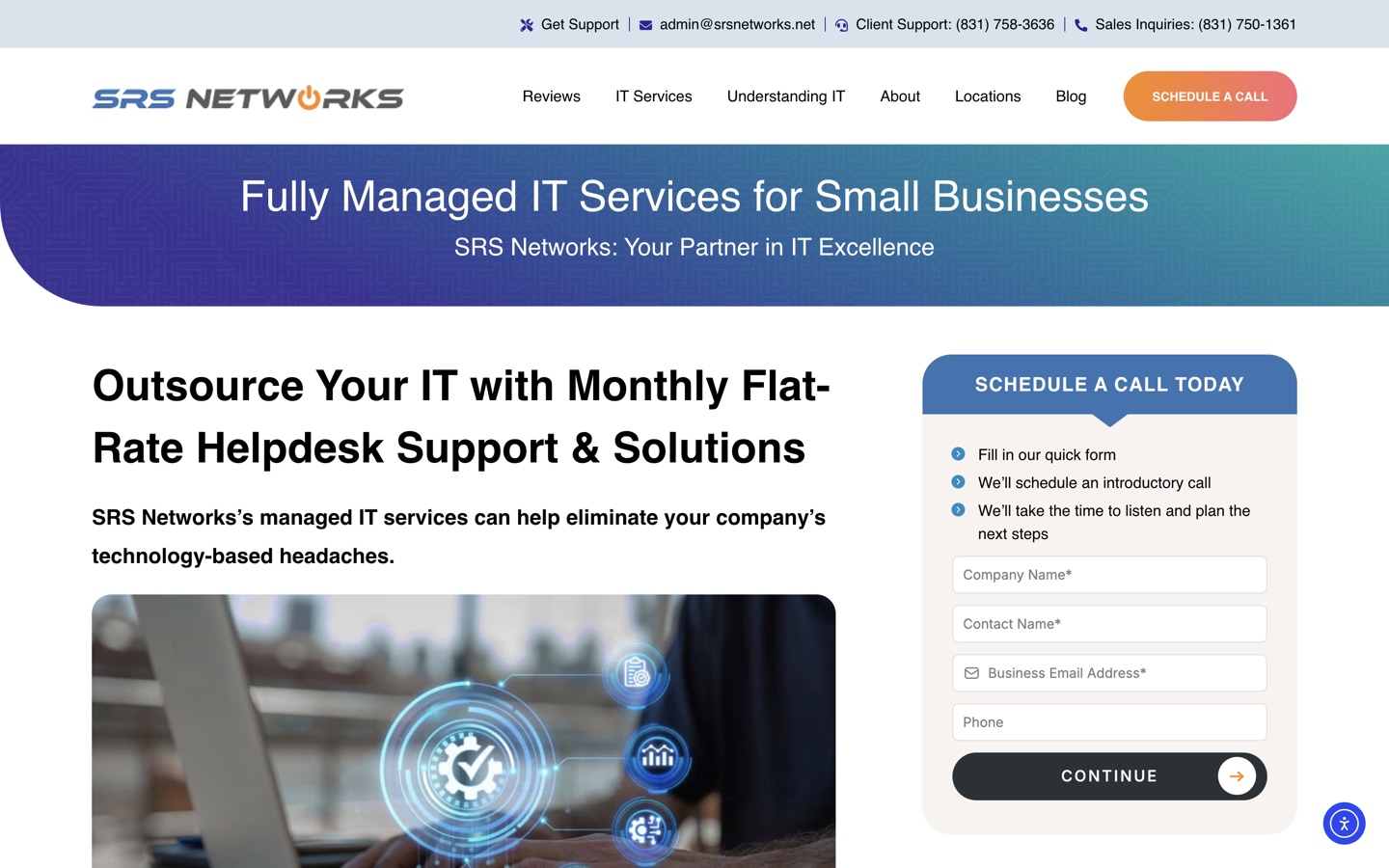
Outsourced IT, help desk, monitoring and vCIO written around uptime and predictable cost rather than acronyms, with a scheduling form built into the page.
Every service page ends in a booking form
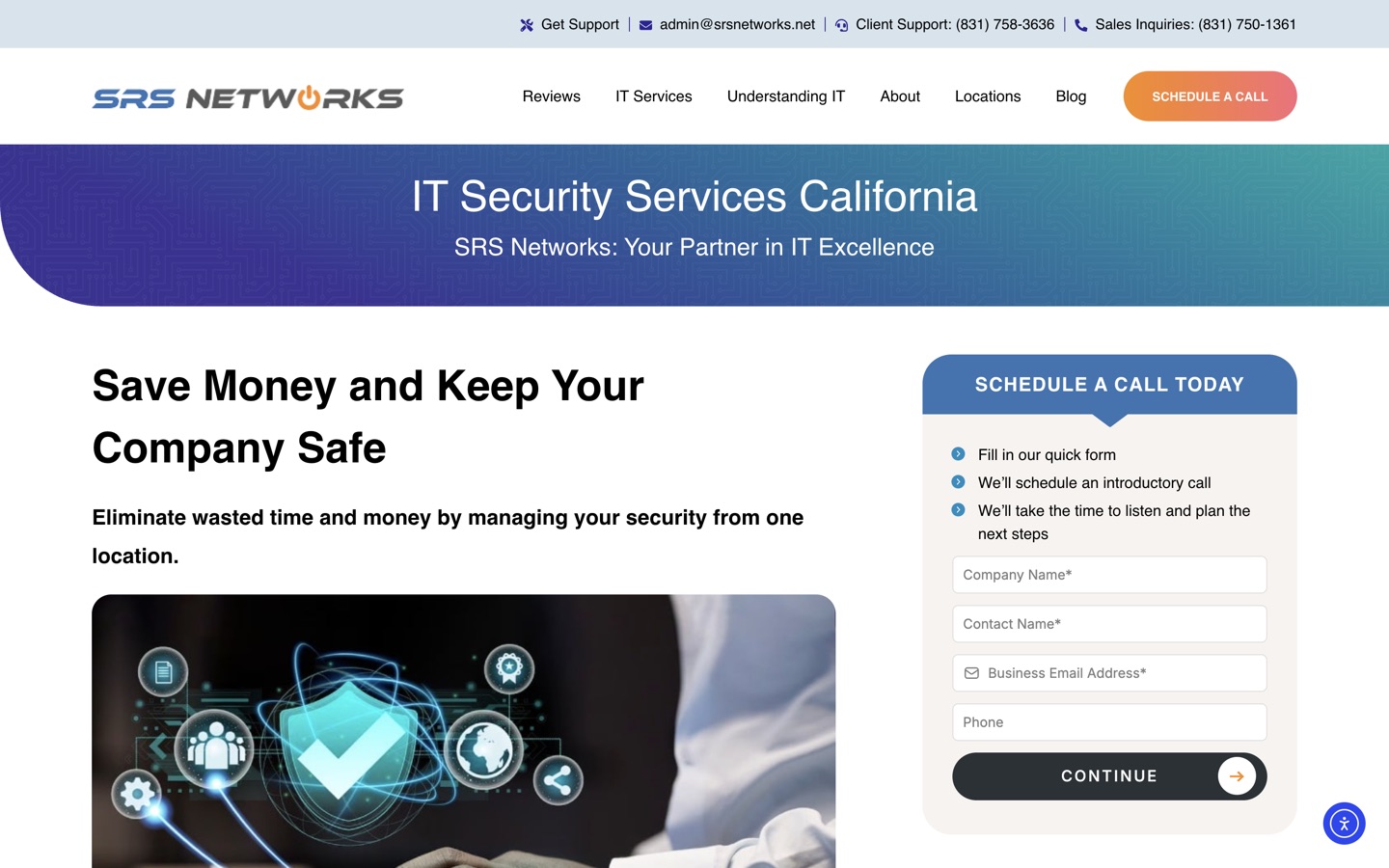
Network security, threat management and email protection given a dedicated page, because cybersecurity is the search that brings the most urgent buyers.
Its own indexed destination
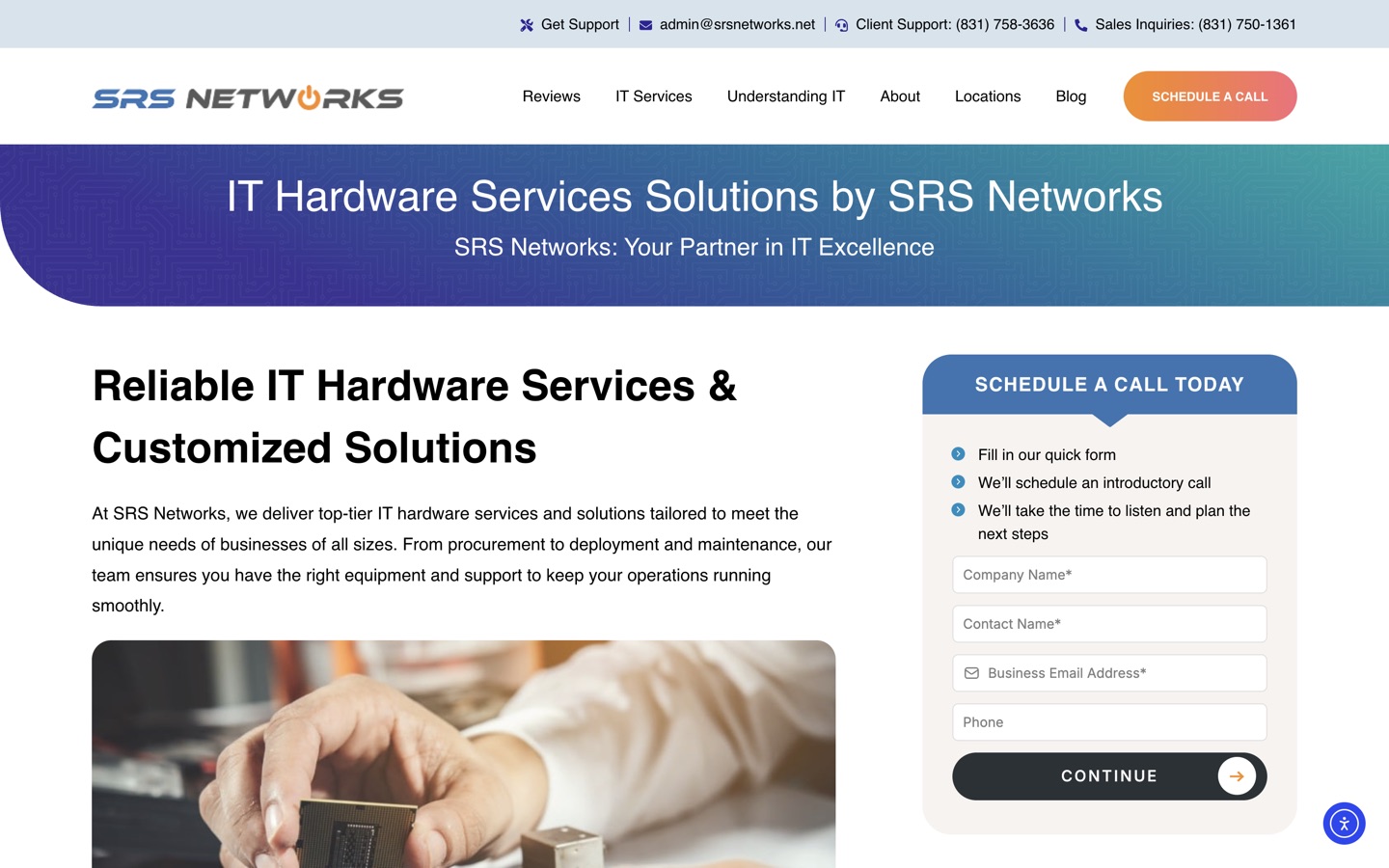
Hardware as a Service, deployment, cabling and lifecycle management presented as an ongoing relationship rather than a one-off fix.
Full lifecycle, 1 page
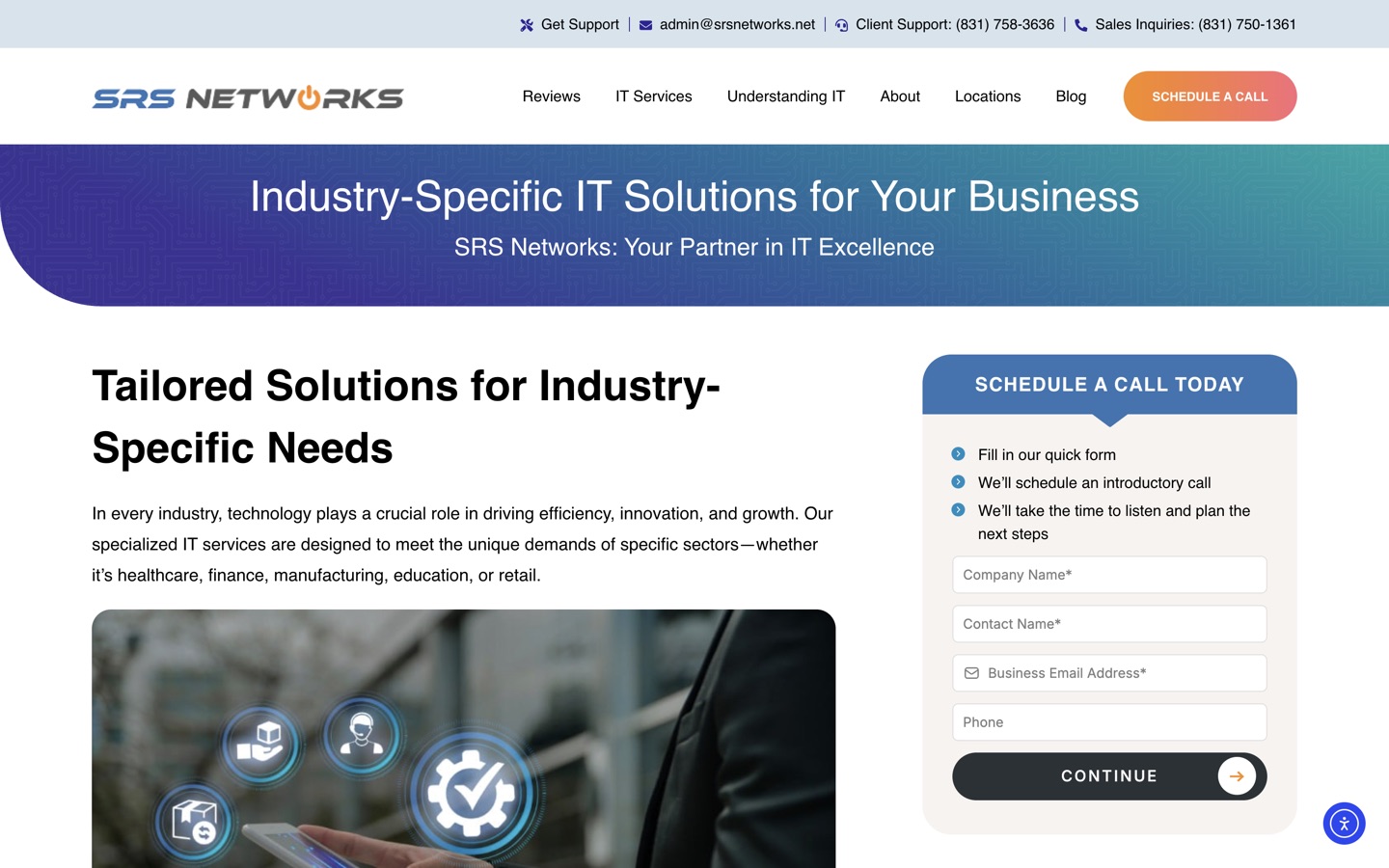
Healthcare, manufacturing, engineering, finance, education and retail each get a path, so a visitor recognises their world instead of reading generic copy.
6 verticals addressed
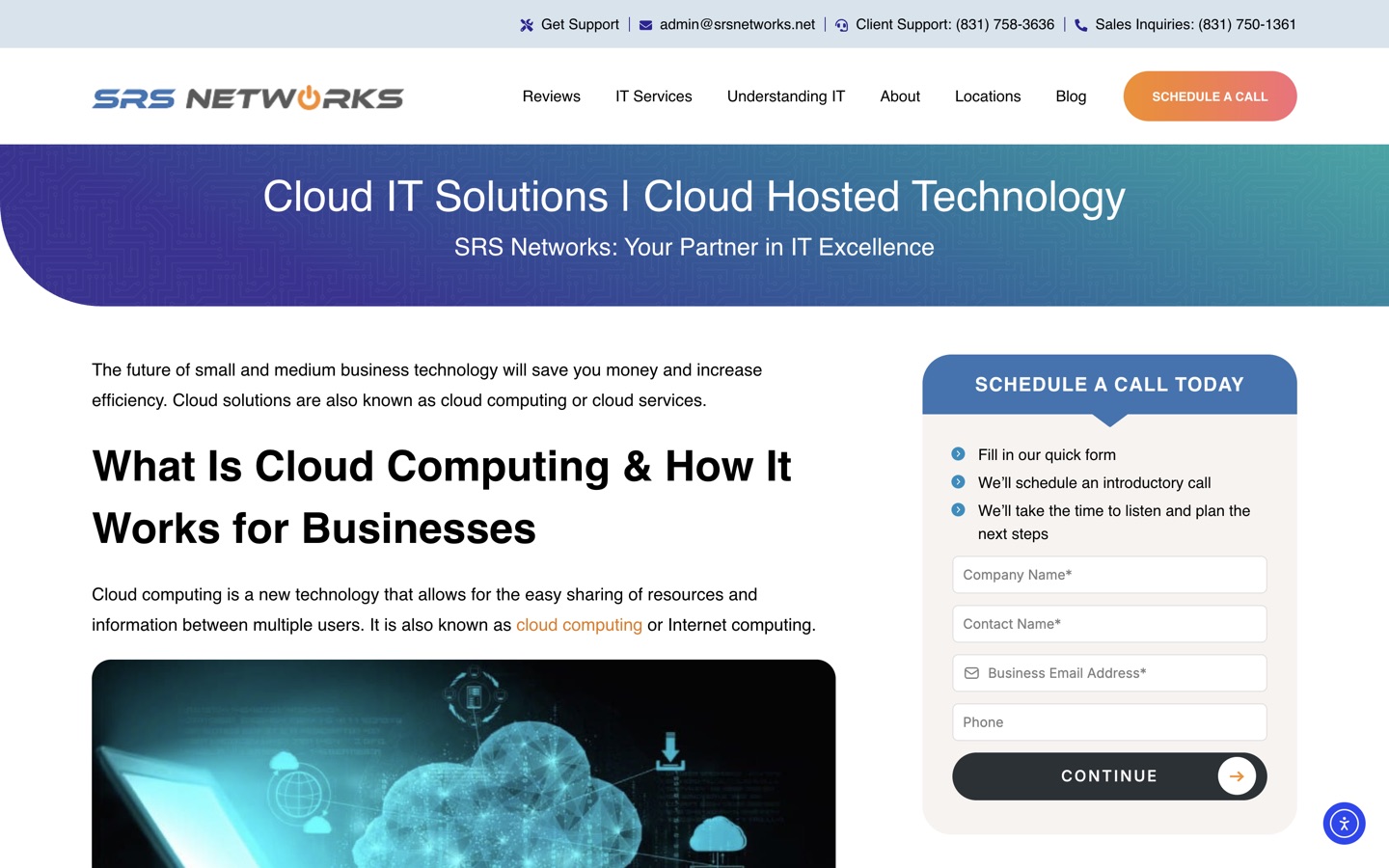
Cloud pages explain what the technology does for a business before naming a product, which is what converts a researching visitor into a scheduled call.
Explanation ahead of the pitch
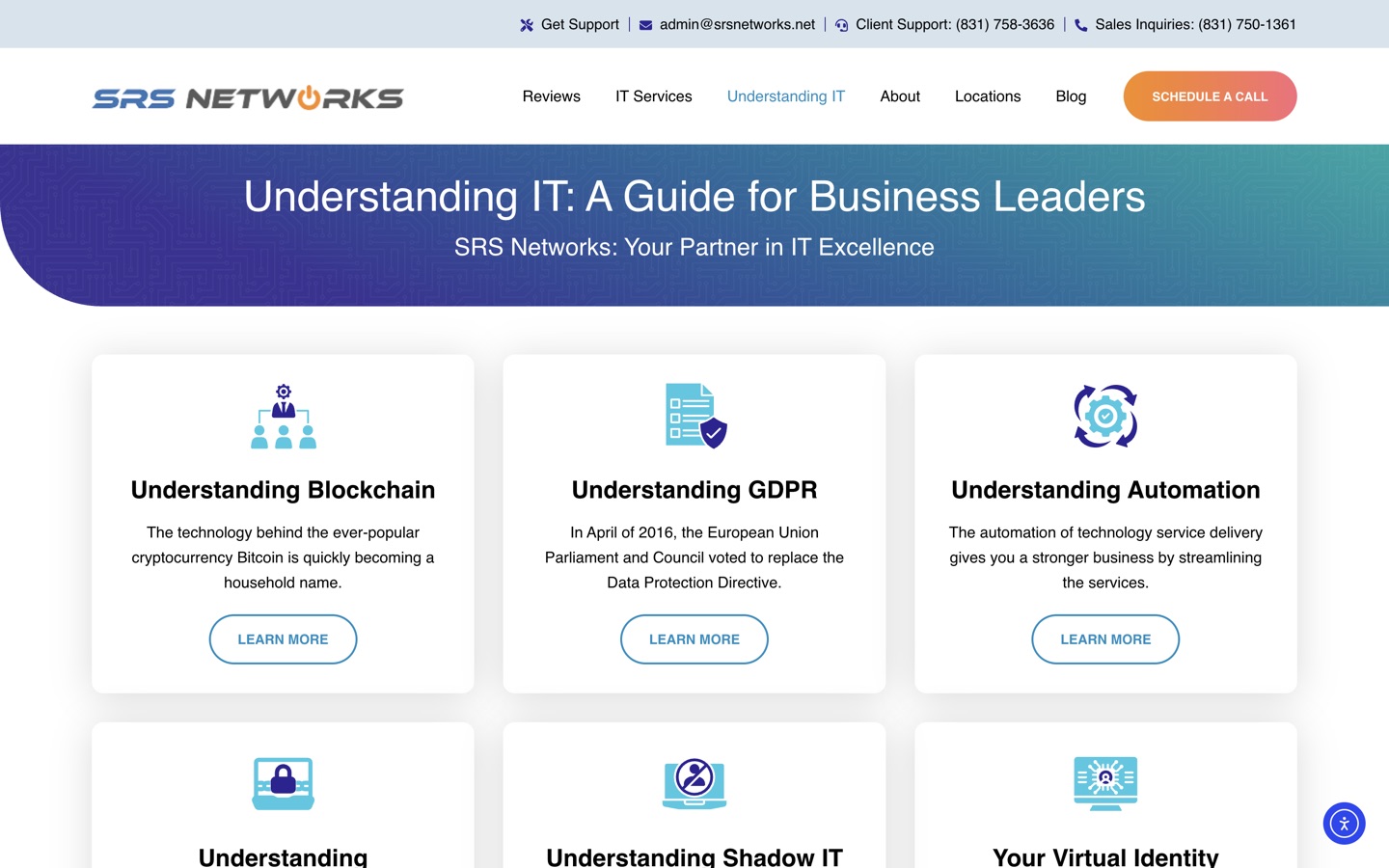
An education hub covering ransomware, shadow IT, BYOD, continuity and network security. It reaches people at the research stage and keeps them in the site.
Topic content feeding the service pages
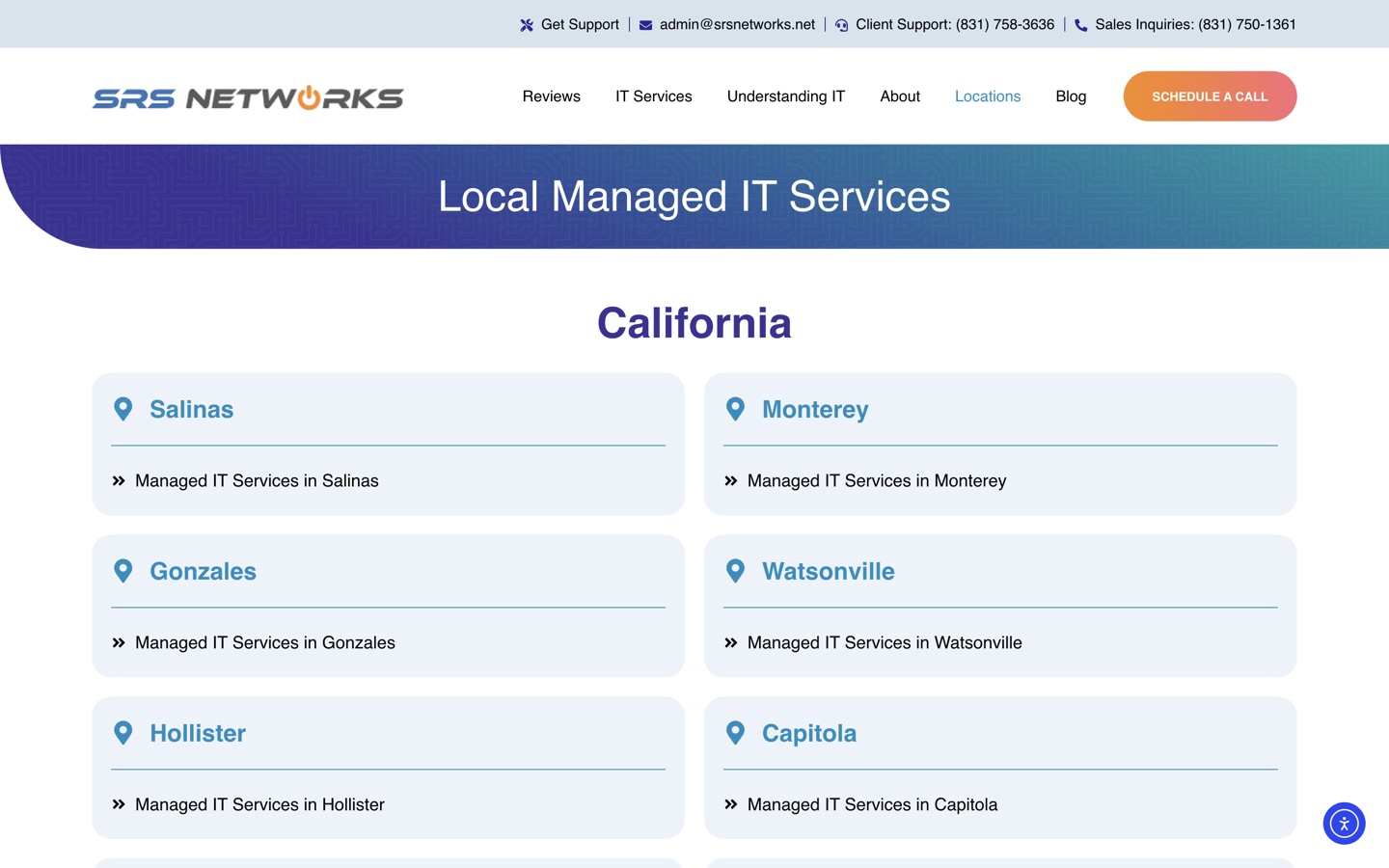
Instead of asking 1 page to rank everywhere, every market got a destination: Salinas, Monterey, Santa Cruz, San Jose and 6 more, each linked into the matching services.
10 city landing pages
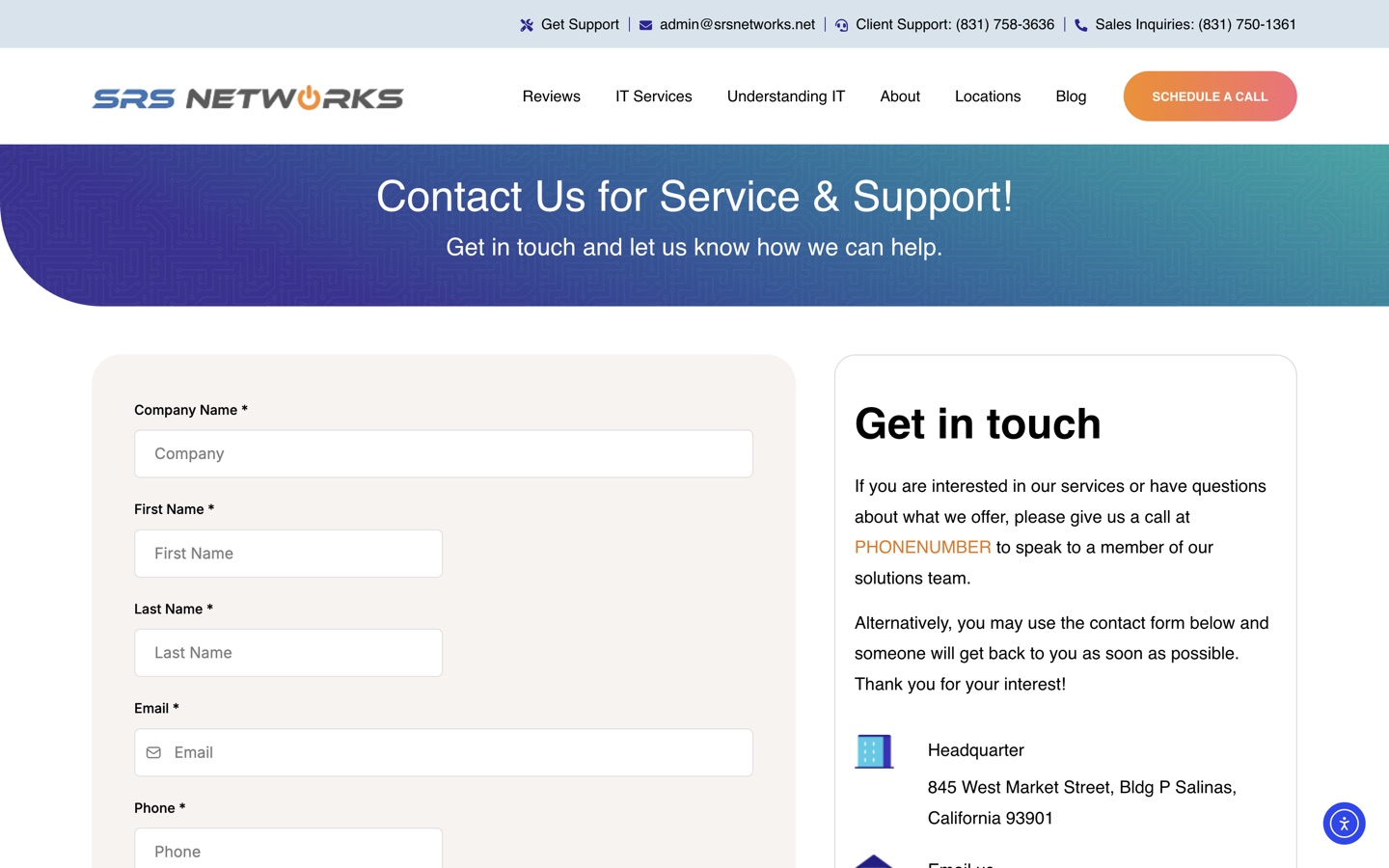
Schedule a Call is the single primary action sitewide, backed by a contact form, direct sales lines, and separate support routes so clients never compete with prospects.
1 primary action, 6 support paths
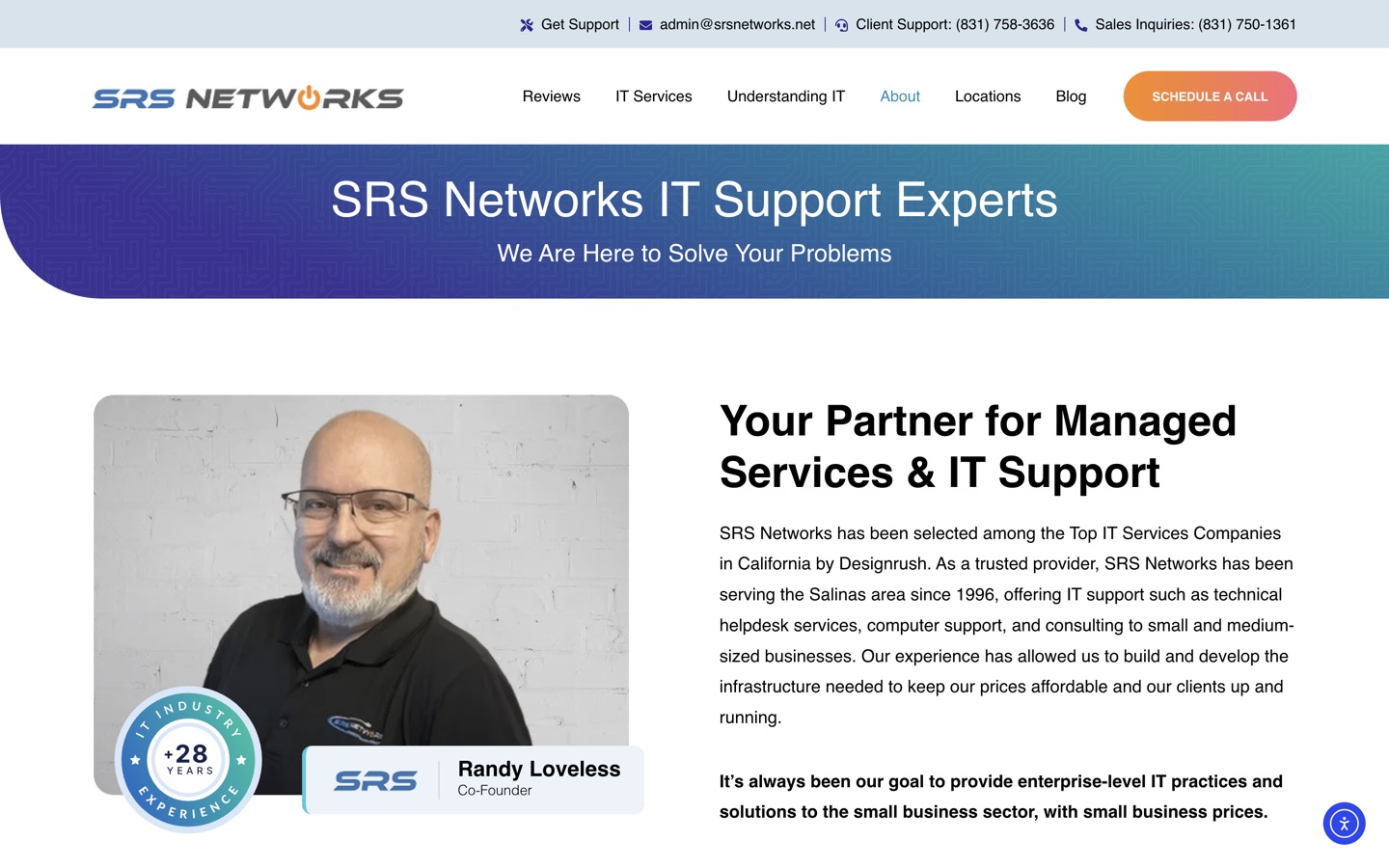
28 years, a named co-founder with a photograph, and a partner and award stack. Proof that was already true, finally visible where buyers look.
Since 1996, 1,000+ customers
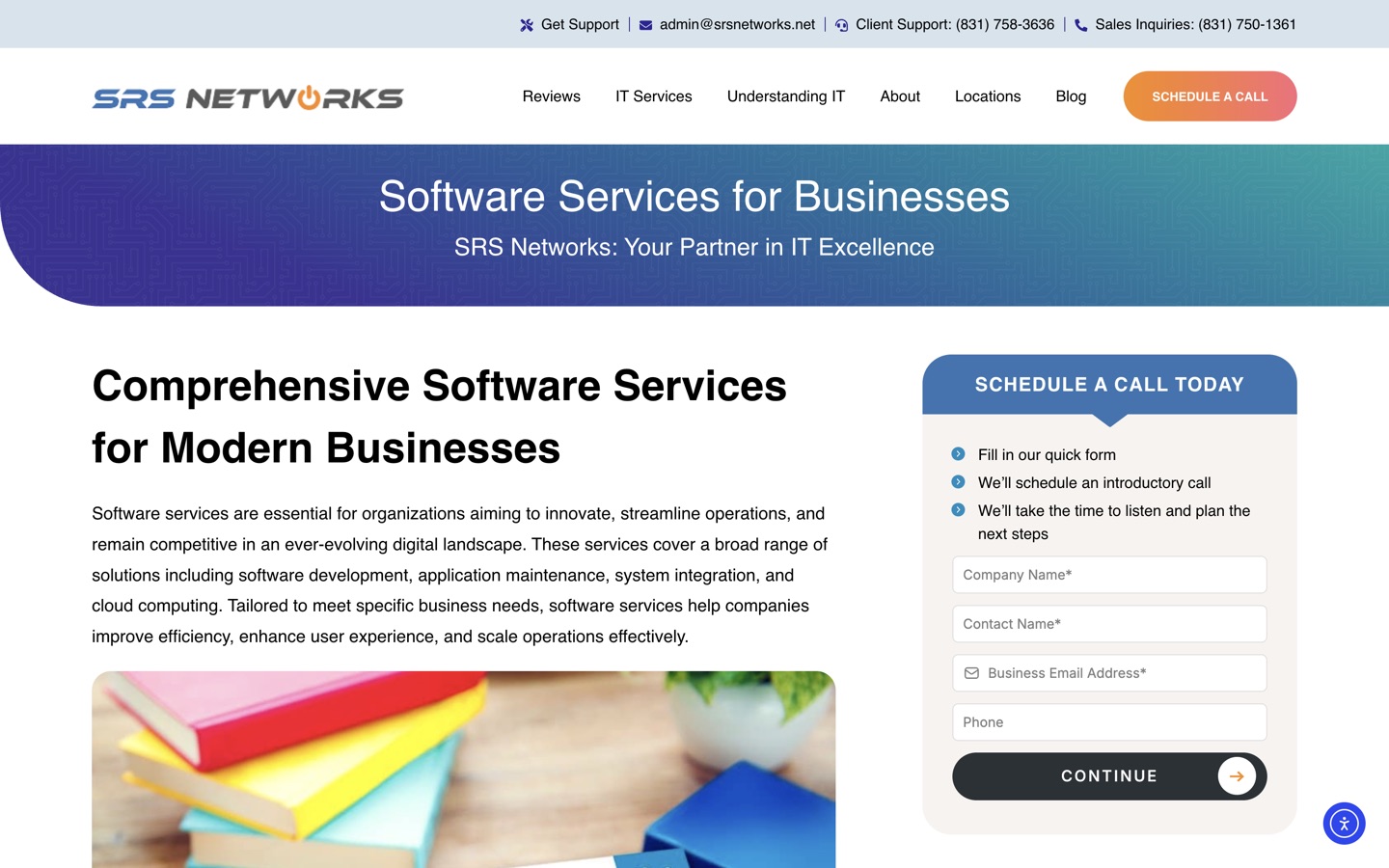
Office 365, Google Workspace and software implementation given a page, because the applications staff touch daily are often the first reason a business calls an IT provider.
Microsoft and Google partner solutions
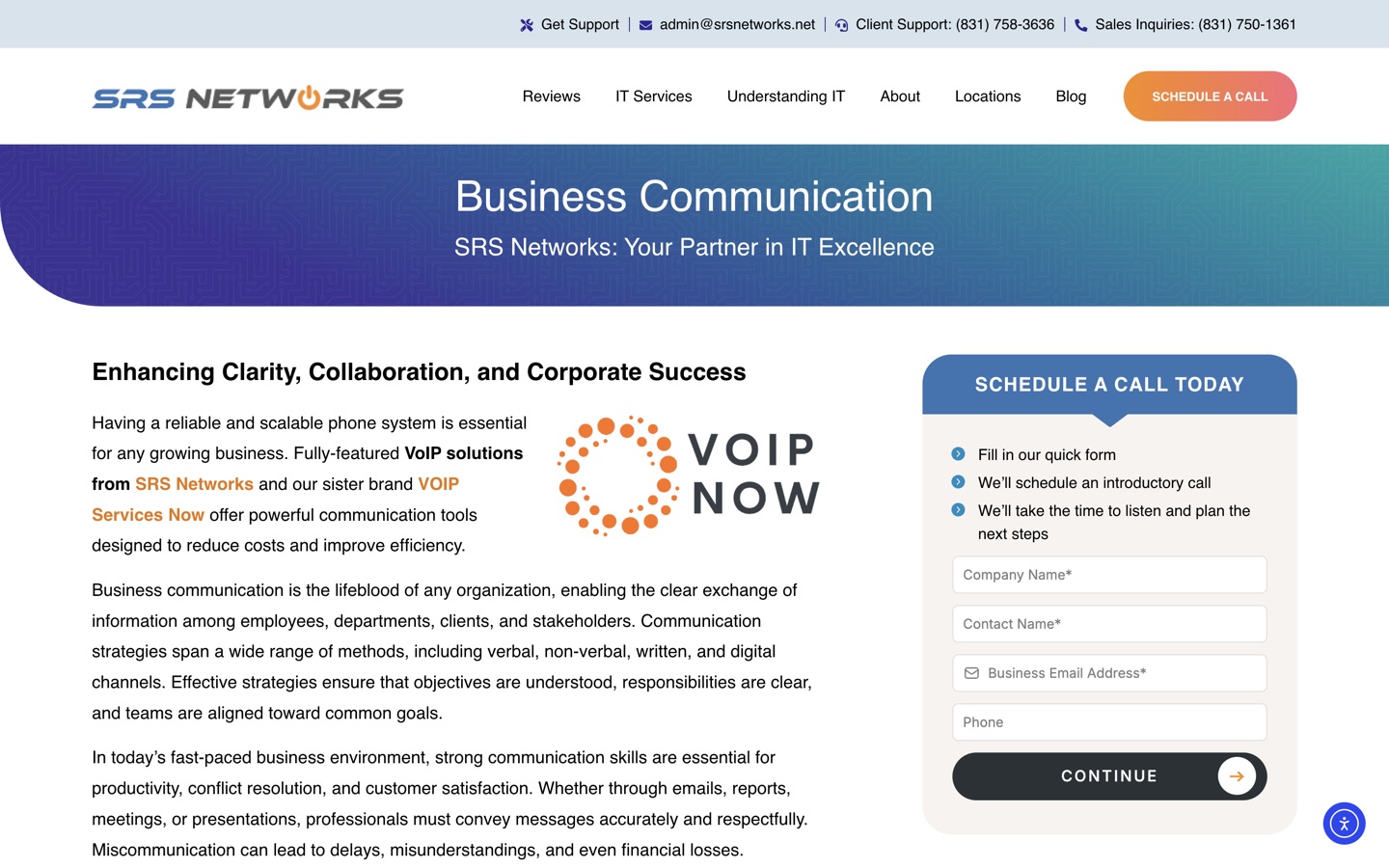
Business VoIP, mobile communication and conferencing sit in their own category, so a company shopping for phones does not have to dig through managed IT to find them.
A 6th service pillar, not a footnote
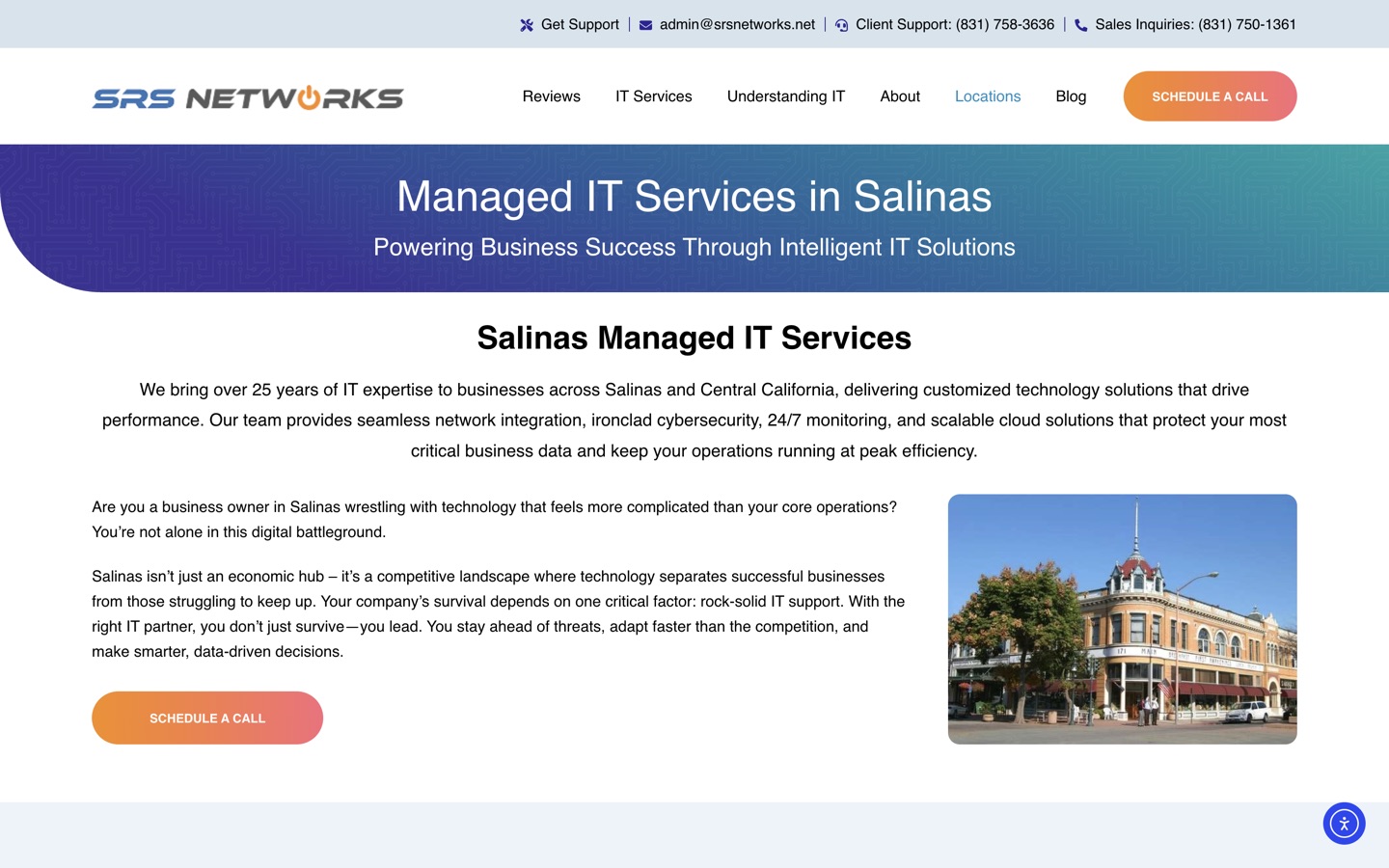
Local proof, area-specific copy and a scheduling form. Multiply this by 10 markets and a single generic page becomes a network of relevant destinations.
1 of 10, each built the same way
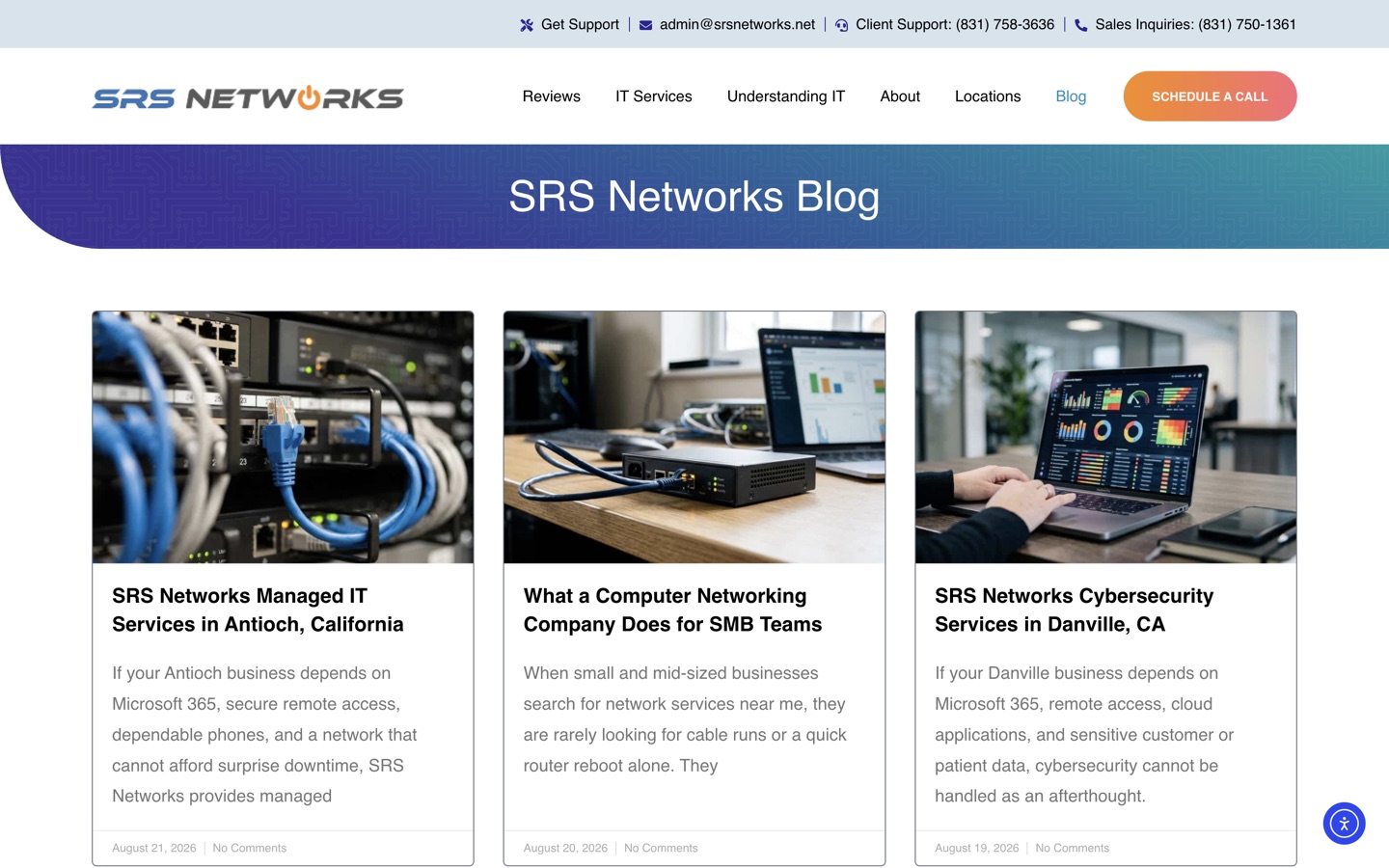
A blog on the same template system, so publishing costs minutes rather than a developer ticket, and every post feeds the service pages it relates to.
Content the client can extend alone
Every decision on the project traced back to one of these, and each one set up the next.
Bring the presence up to date while protecting the local reputation built over nearly 3 decades.
Improve page delivery and give visitors a cleaner route through a very large service catalog.
Present a full-service managed IT and cybersecurity provider, not a break-fix computer shop.
Compete properly in each California market instead of 1 page trying to cover all of them.
Combine local citations with niche-relevant links to compete on genuinely competitive terms.
Convert more prospects into scheduled calls while keeping support instant for existing clients.
Ship a reusable framework for services, industries, locations, and educational content.
Offline, SRS Networks was an established leader. Online, the story fell apart, and prospects noticed the gap first.
The design and performance felt years behind the company's actual capabilities, undercutting trust before a single conversation.
1 generic site was expected to rank across every city the company served, so it ranked strongly in none of them.
A broad service catalog with no guided journey meant visitors browsed, got lost, and left without booking anything.
Dozens of services across managed IT, security, cloud, hardware, software, and communications had no structure a business owner could scan.
Relevance and backlink strength lagged behind rivals competing for the same managed IT and cybersecurity searches.
There was no scalable foundation for new service pages, industries, locations, blog posts, or educational resources.
Six calls that shaped the project, and the reasoning we apply to work like this.
An information architecture problem cannot be fixed with visuals. We turned a sprawling service list into 6 categories first, then designed against that structure.
Relevance does not split. Asking a single page to rank in 10 towns produces a page that ranks well in none, so each market got its own destination.
Existing clients hunting for help were crowding the path prospects needed. Sales and support now run on parallel routes that never compete.
Competing calls to action weaken each other. Everything on the site points at Schedule a Call, so there is never a question about the next step.
Local citations move geographic results. Niche-relevant links move competitive ones. Doing only the first caps how far a site can climb.
Reusable templates mean the next city, service, or industry costs hours instead of a rebuild, so the site keeps compounding after we hand it over.
6 workstreams, and what each one actually included.
A page system designed to keep growing long after launch.
Prospects and existing customers want opposite things from the same website. Both got their own route.
Within 6 months of relaunch, SRS Networks reported roughly 3× the website visitors, alongside significantly stronger local rankings.
The traffic and ranking figures are reported by SRS Networks. The effects below describe how a rebuild of this kind changes a business, not separately measured outcomes.
More prospective customers reach the company through non-branded local searches, not just people who already knew the name.
28+ years of history, 1,000+ customers, and enterprise-grade partners land before a sales conversation starts.
People filter themselves by service, industry, and location, so enquiries arrive already closer to a fit.
Existing clients keep direct access to help while prospects get a clean scheduling path.
The reusable page system means new cities, services, and industries can be added without rebuilding anything.
The engagement was built to grow the business, rather than stopping the day the website went live.
A full rebuild across 6 workstreams, not a visual refresh:
The SEO program ran for 6 months after relaunch:
Ten markets, each with its own destination instead of 1 page trying to rank everywhere:
Structure first, design second. The method we used here:
They want opposite things, so each got a separate route:
If your company is better than its website, this is exactly the gap we close:
Tell us where your business is going, and we'll show you what a rebuilt digital presence could do for it.