Back to our work Case study, VoIP Services Now

Launched from zero. Ranked in 3 months.

A brand-new business with no website and no search history. We built the entire digital presence from scratch, and target keywords hit Google's top 3 within 3 months.

The build

The storefront, from scratch.

Launched from zero, brand and site together
The VoIP Services Now homepage
What we built

The work, up close.

15 pieces of the build, every one a real page from the live site.
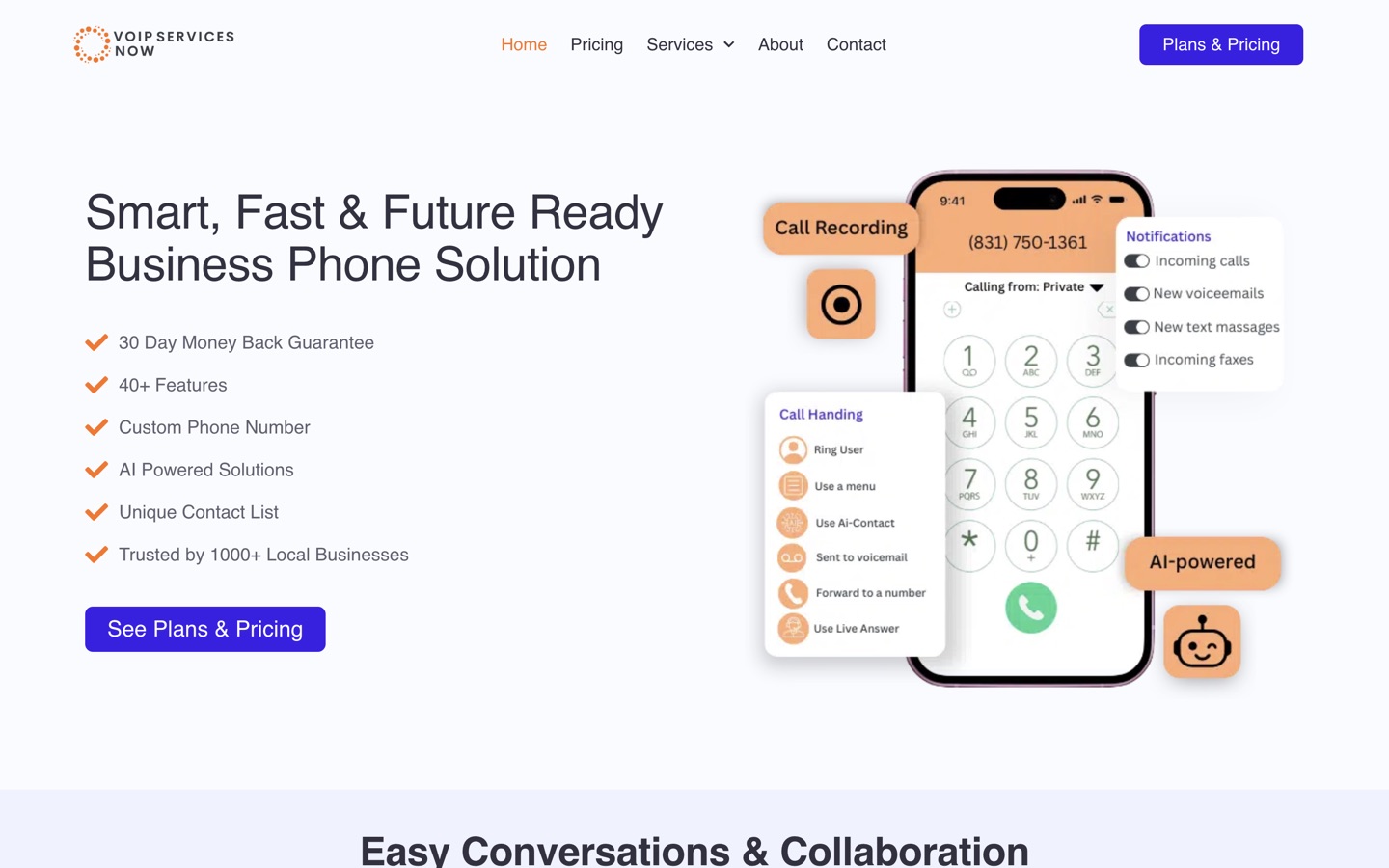
The VoIP Services Now homepage
Homepage

Built to convert from day 1

A 12-step sequence from outcome headline through benefits, plans, feature depth, objections and a final ask. Inspired by proven enterprise patterns, then built custom for this brand.

12-step conversion sequence
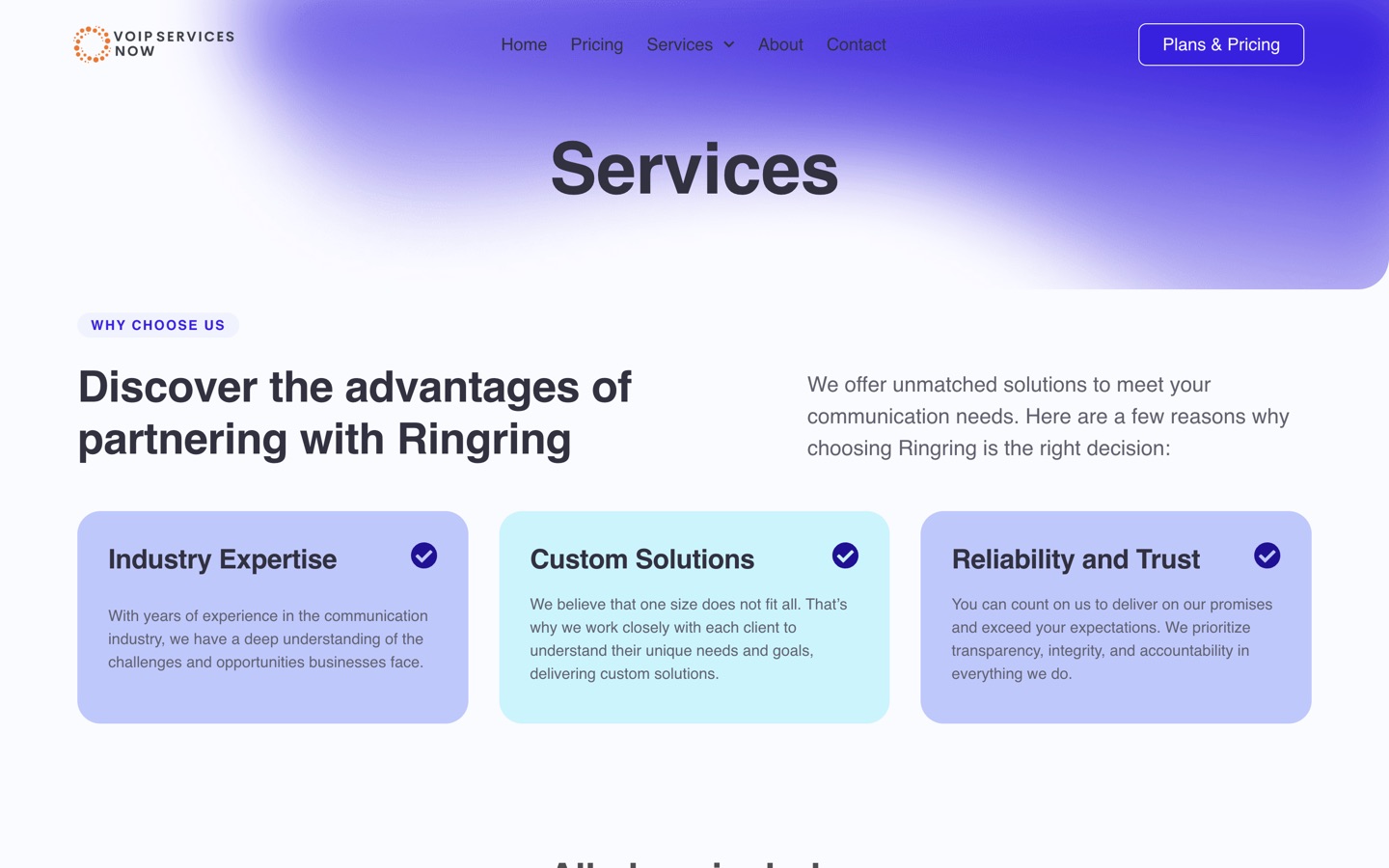
The features and services page
Feature catalog

Depth without the overwhelm

A 40+ feature library grouped so a browser can skim and a researcher can go deep, covering calling, messaging, video, mobility, AI answering and integrations.

Progressive disclosure by design
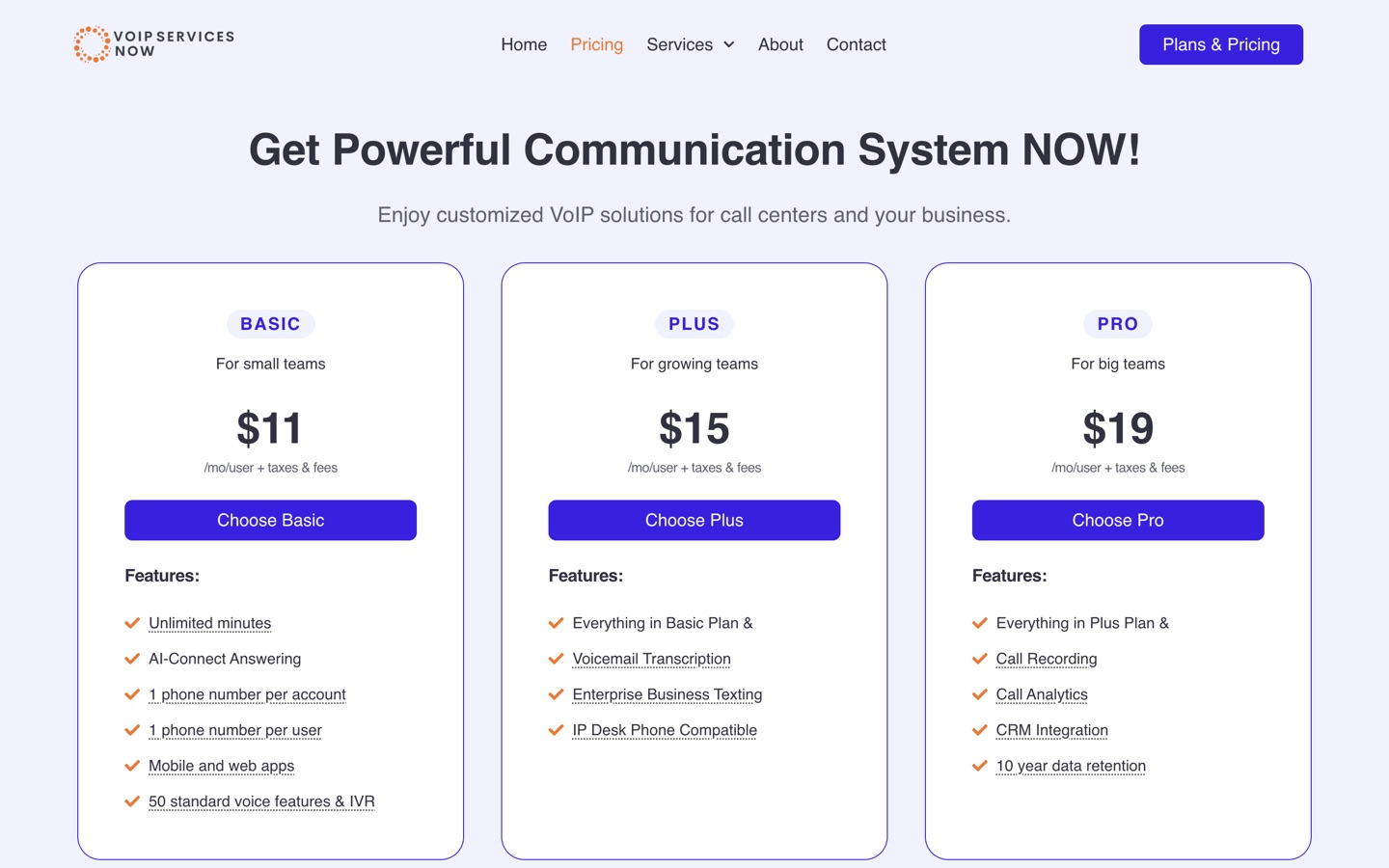
The pricing page showing three plan tiers
Pricing journey

3 plans. Zero confusion.

Tiers published openly with a full comparison, because hidden pricing is the biggest single exit reason in this category. Plan buttons open signup forms in place.

Tiers, comparison, embedded signup
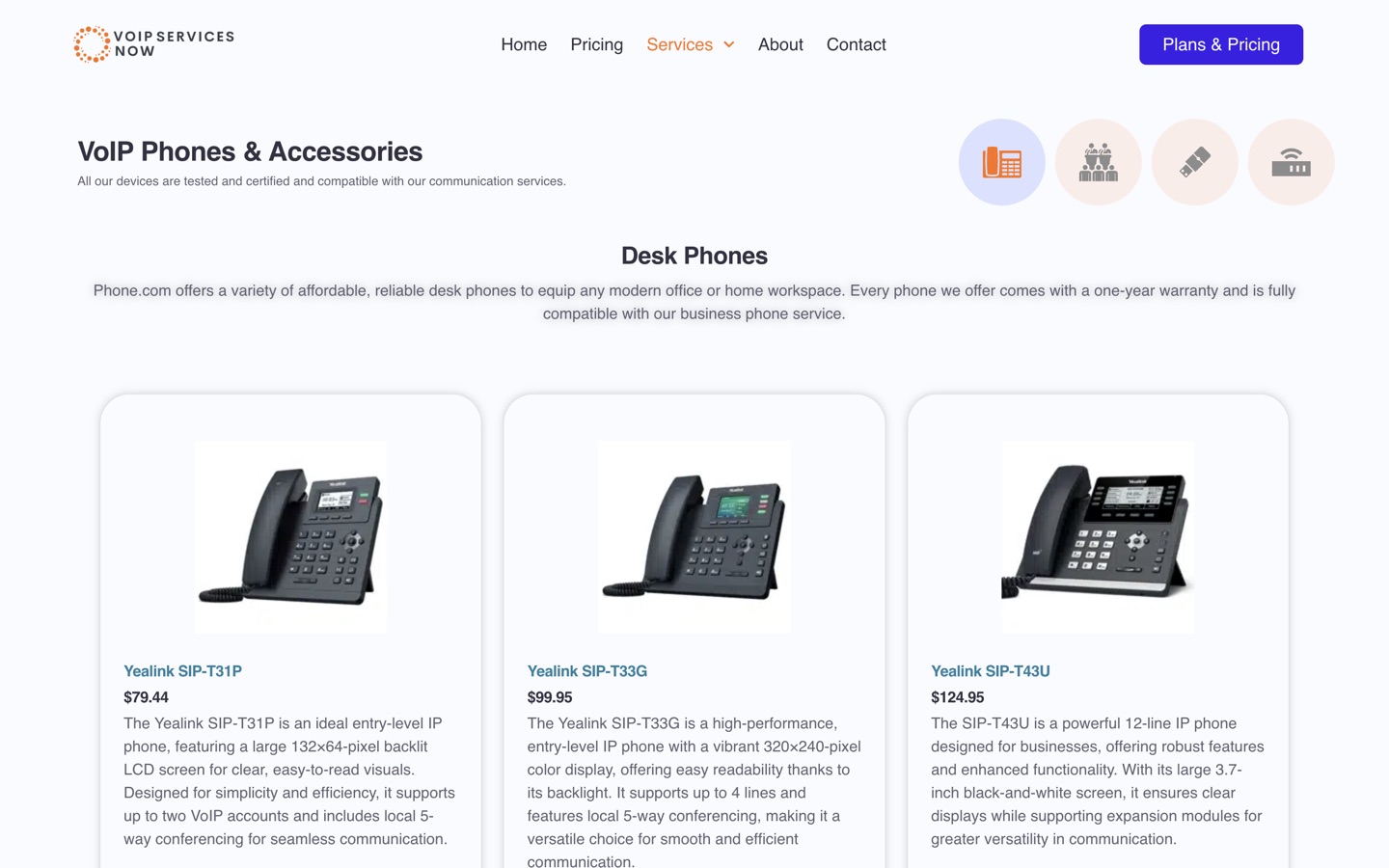
The VoIP phones and accessories catalog
Hardware

Model-level detail for hardware buyers

Desk phones, conference units, DECT systems and analog adapters each listed properly, so a buyer who wants physical handsets is not left guessing about compatibility.

Full hardware catalog with specs
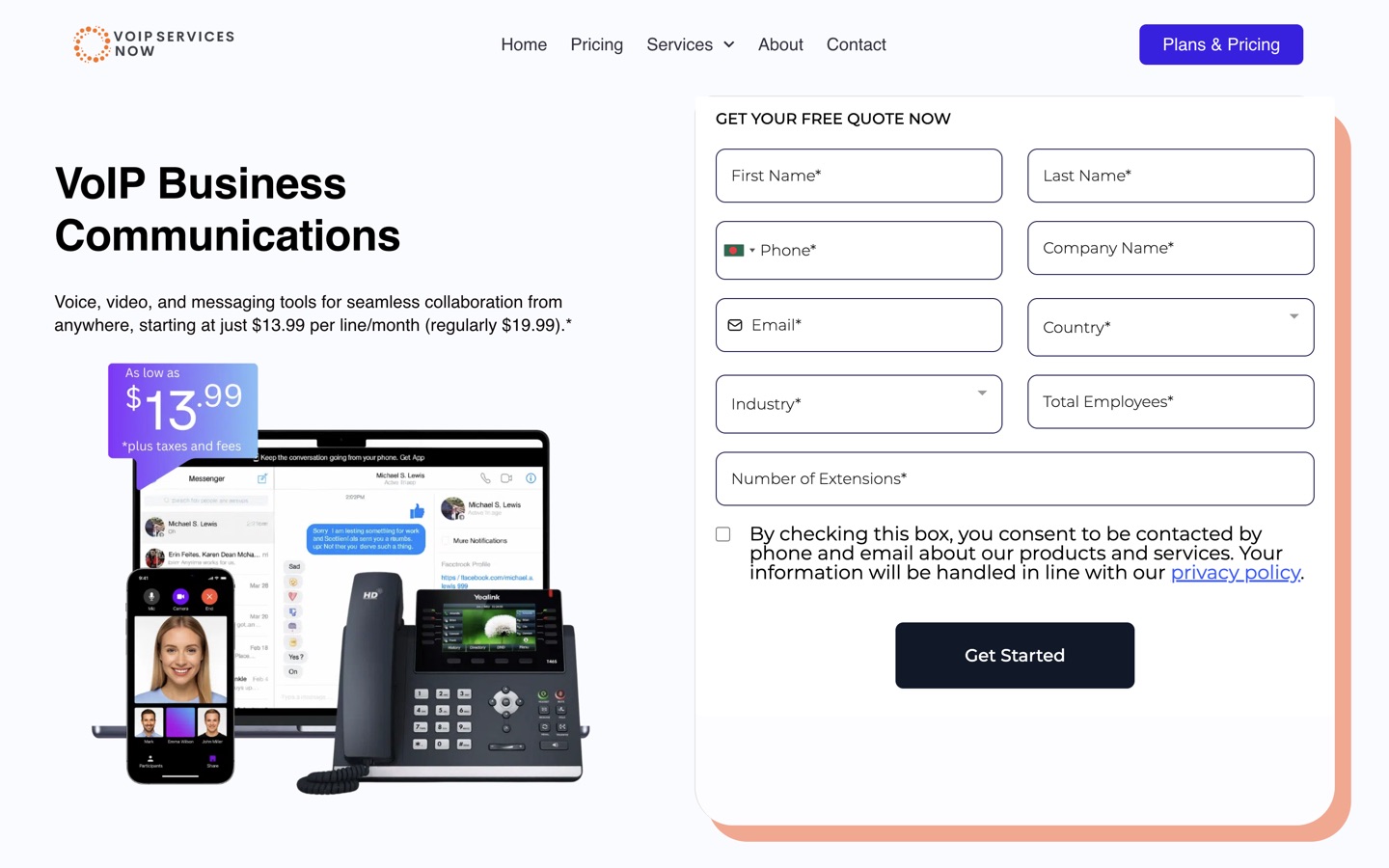
The unified communications page
Product depth

For buyers comparing full platforms

A dedicated page for prospects evaluating a complete communications platform rather than a phone line, with integrations and collaboration covered in detail.

Teams, Slack, Salesforce and more
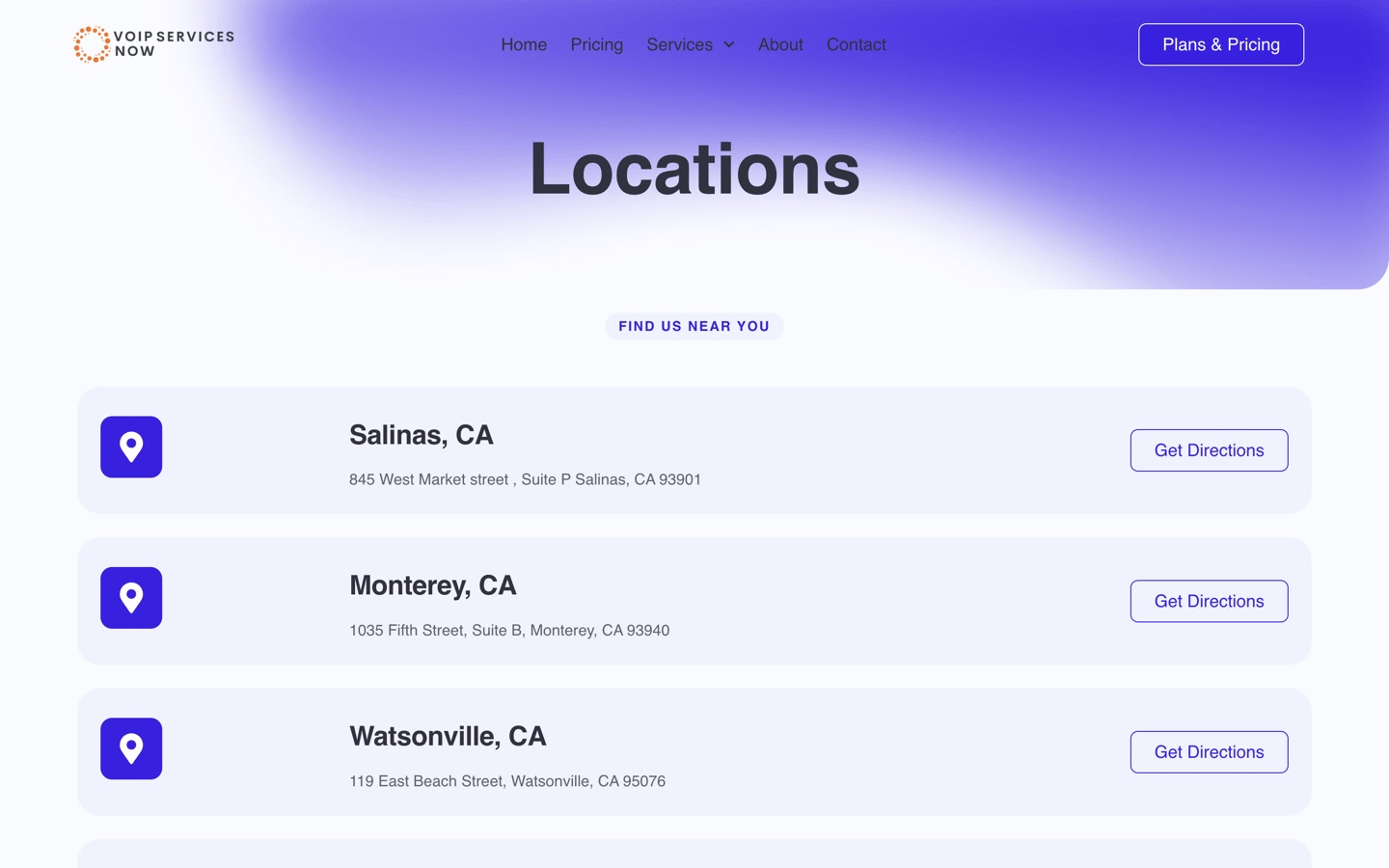
The locations hub listing California service areas
Local hub

Somewhere a new domain can win

A locations hub gave a brand-new site local relevance while broader business VoIP terms were still out of reach.

Local relevance from launch
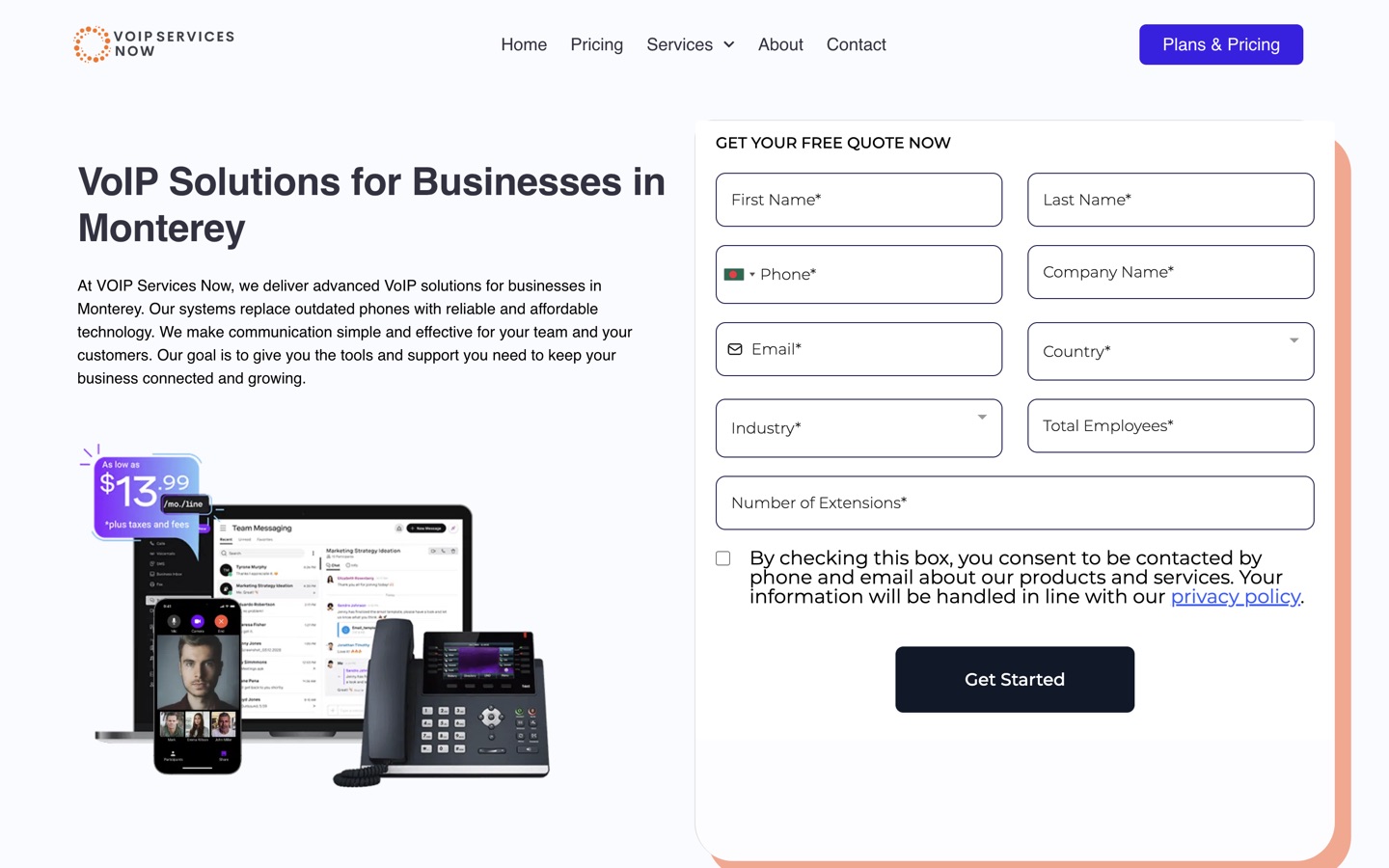
The Monterey city landing page
City pages

Written for the market, not templated

Each city page carries local language, benefits, feature education, FAQs and its own quote form, rather than swapping a place name into identical copy.

Local content, not find-and-replace
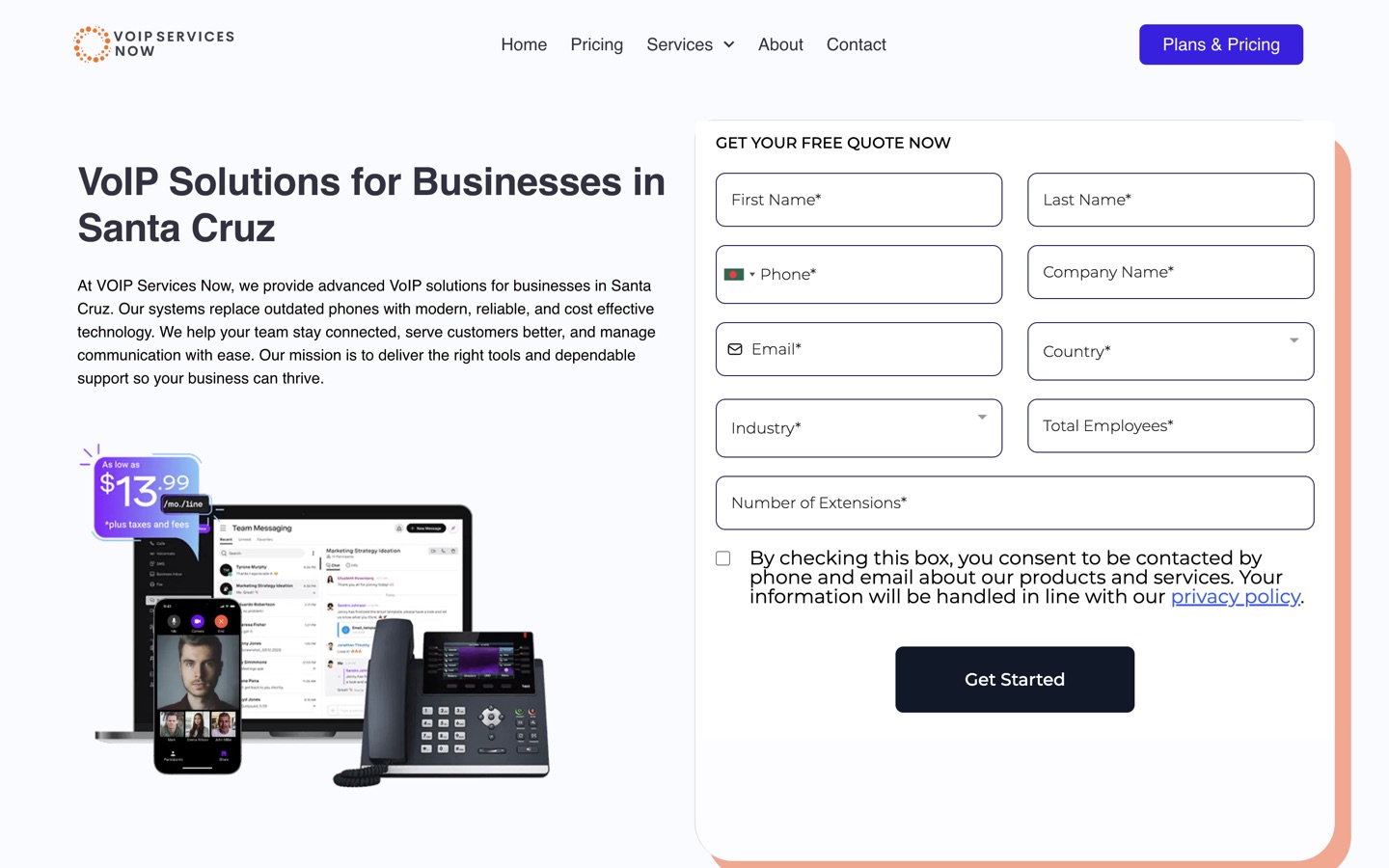
The Santa Cruz city landing page
Coverage

A repeatable local template

Once the pattern proved itself, new markets became hours of work instead of a new project, which is what makes local SEO affordable to expand.

New markets in hours
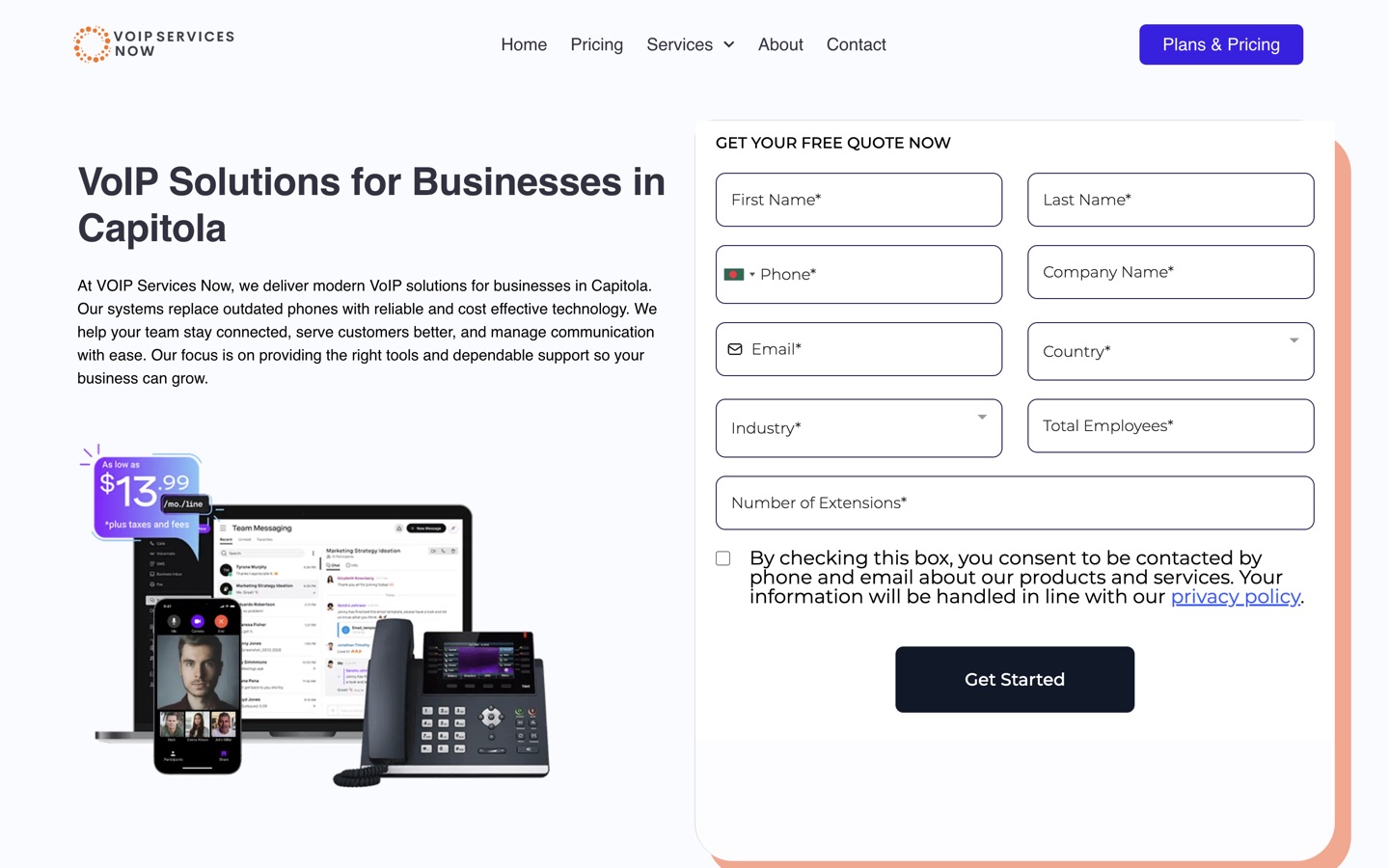
The Capitola city landing page
Long tail

Small markets are easier to win

Smaller towns face less competition, so they deliver early rankings and real enquiries while the bigger terms mature.

Early wins on lower-competition terms
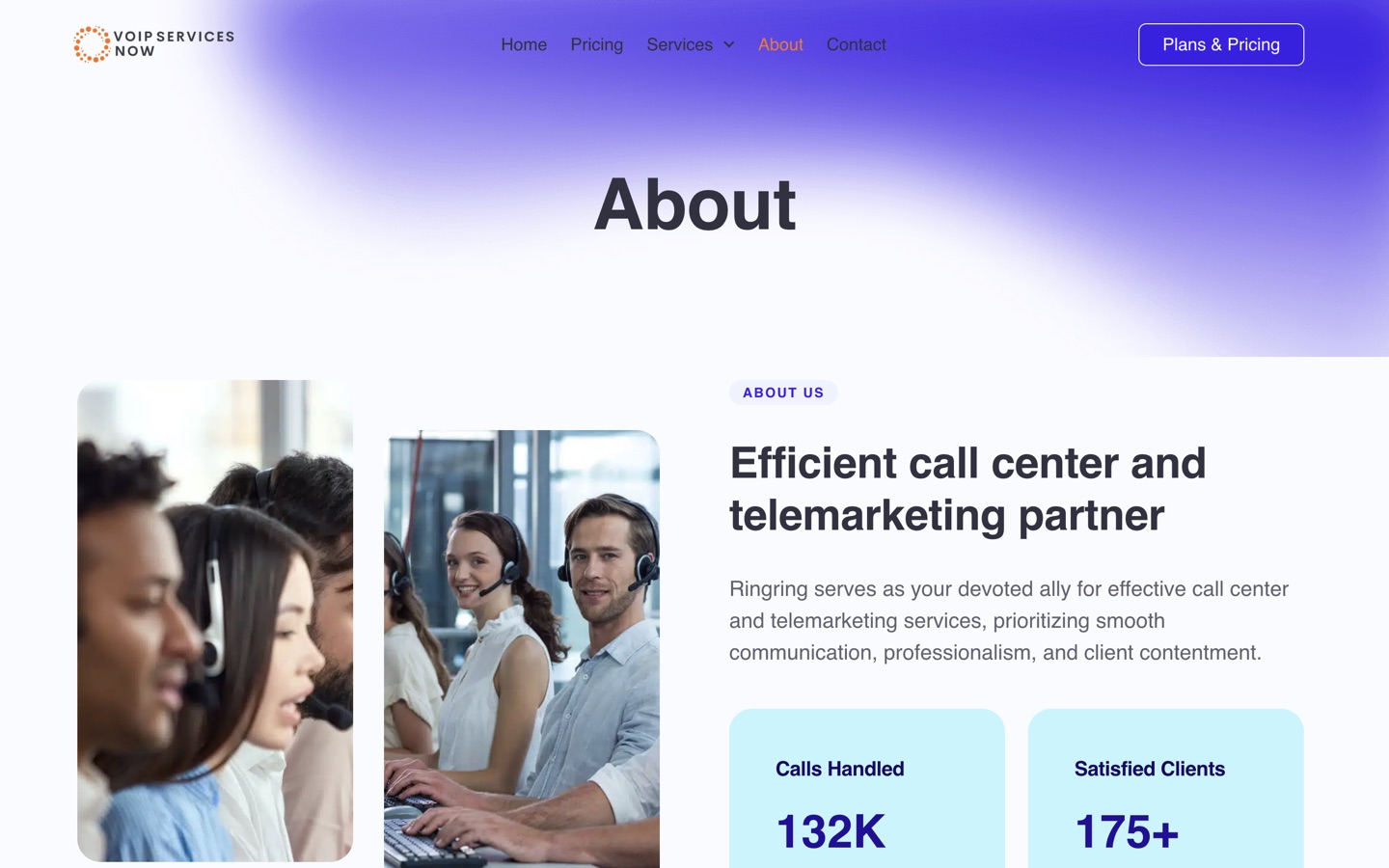
The about page with company statistics
Credibility

Make a new company feel established

Team imagery and operational numbers give a brand-new business the substance buyers expect when comparing it against national providers.

Credibility on the first visit
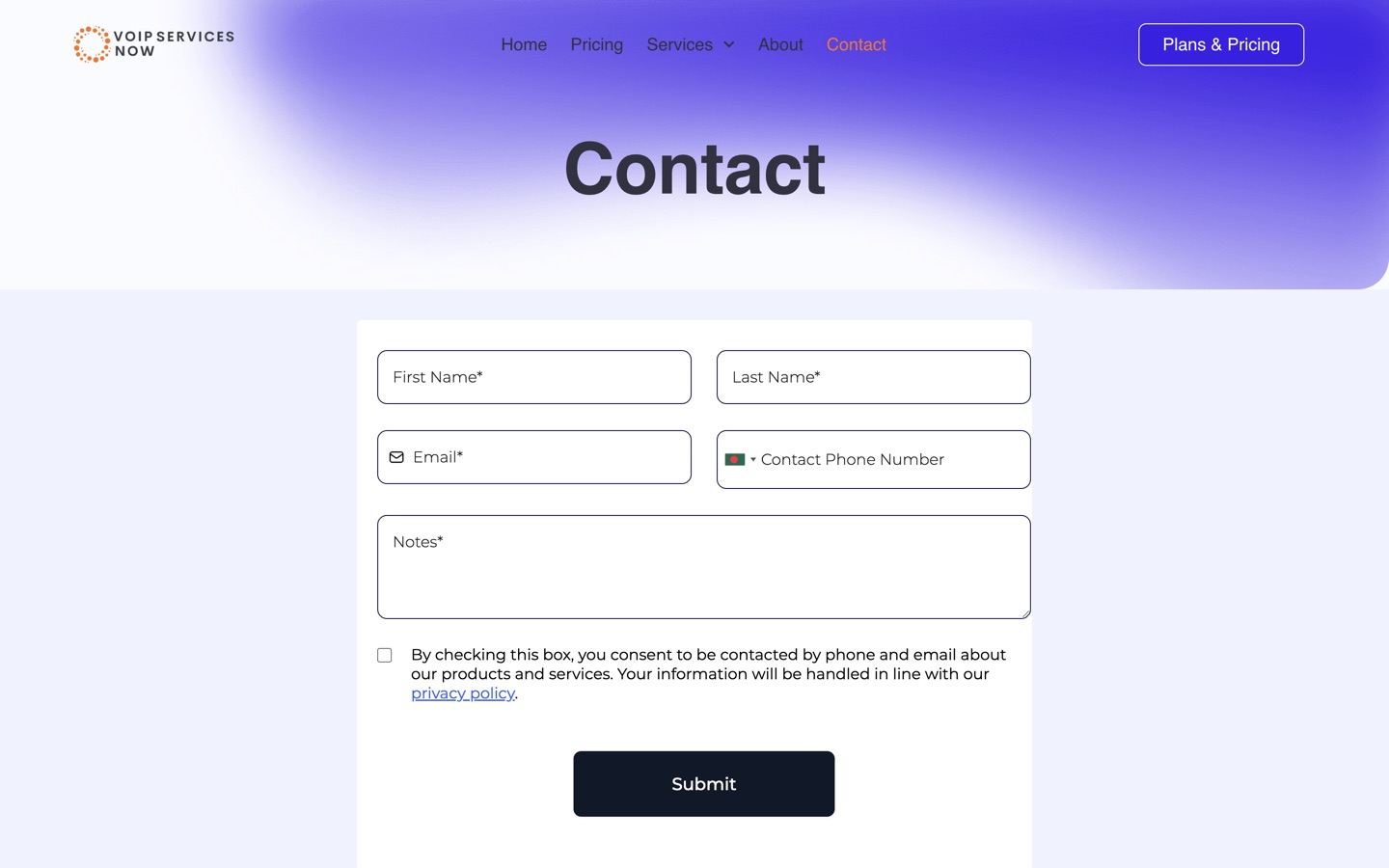
The contact page with enquiry form
Conversion

Never more than one step from a quote

Quote forms repeat across the site and every plan button opens a signup in place, so intent is captured wherever it appears.

Forms on every commercial page
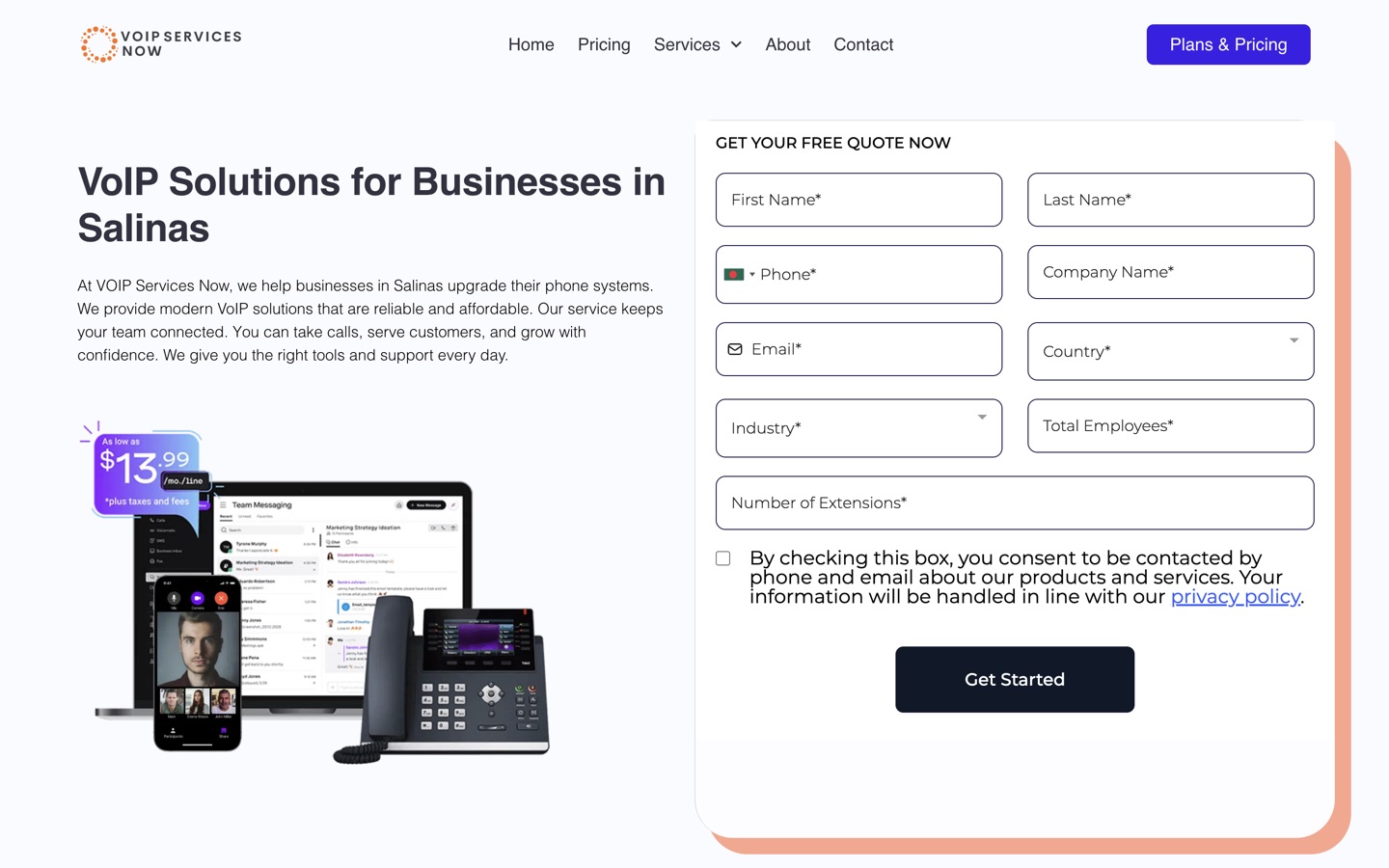
The Salinas VoIP landing page
City page

Local pages as an acquisition system

Each market gets a full page with its own quote form, not a swapped place name. Salinas, Monterey, Santa Cruz, Capitola, Watsonville, Gilroy and San Jose all run the same play.

7 California markets covered
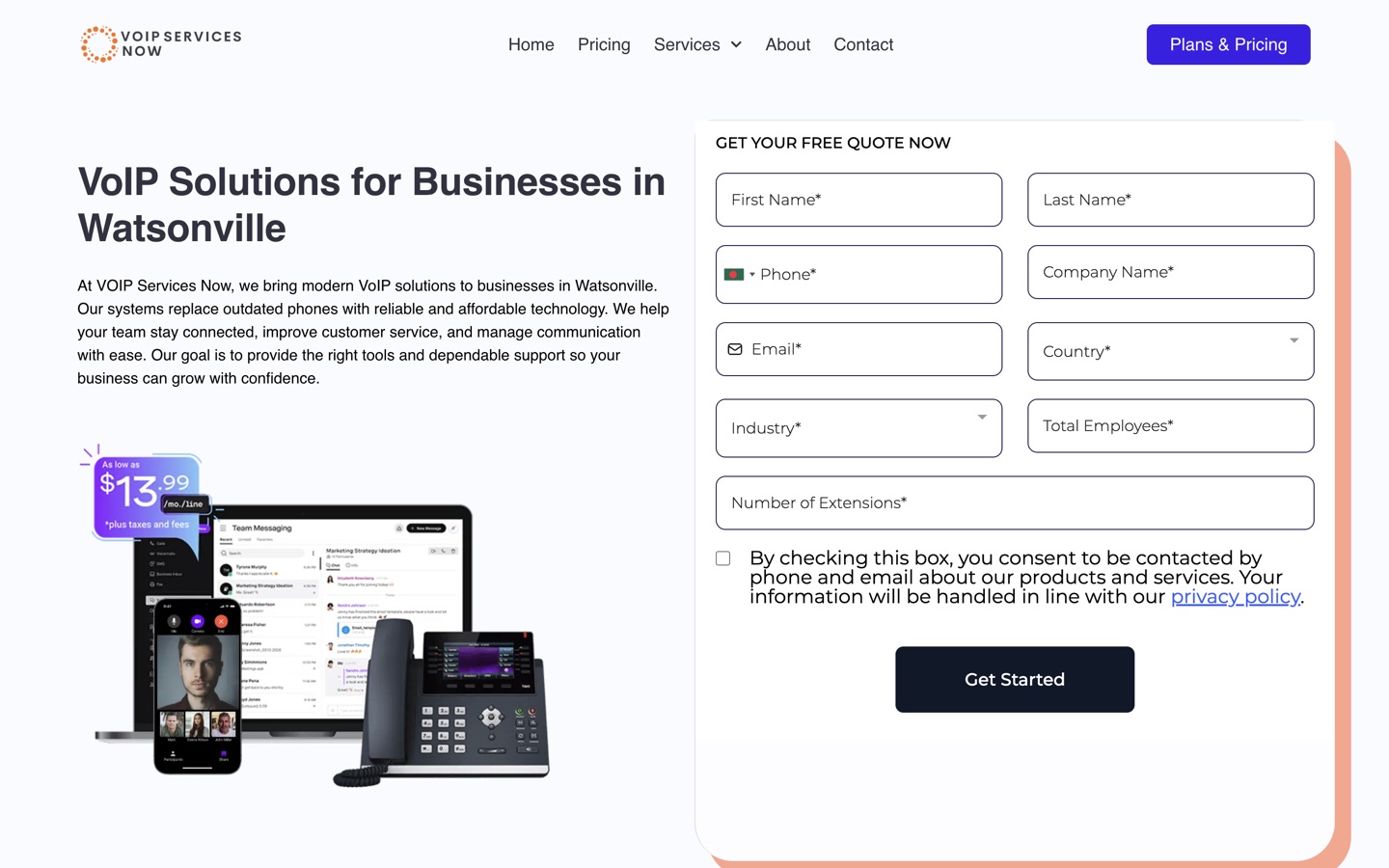
The Watsonville VoIP landing page
Coverage

Built once, repeated cheaply

The template made each new town a short job, which is what turns local SEO from a project into an ongoing channel.

New market in hours, not weeks
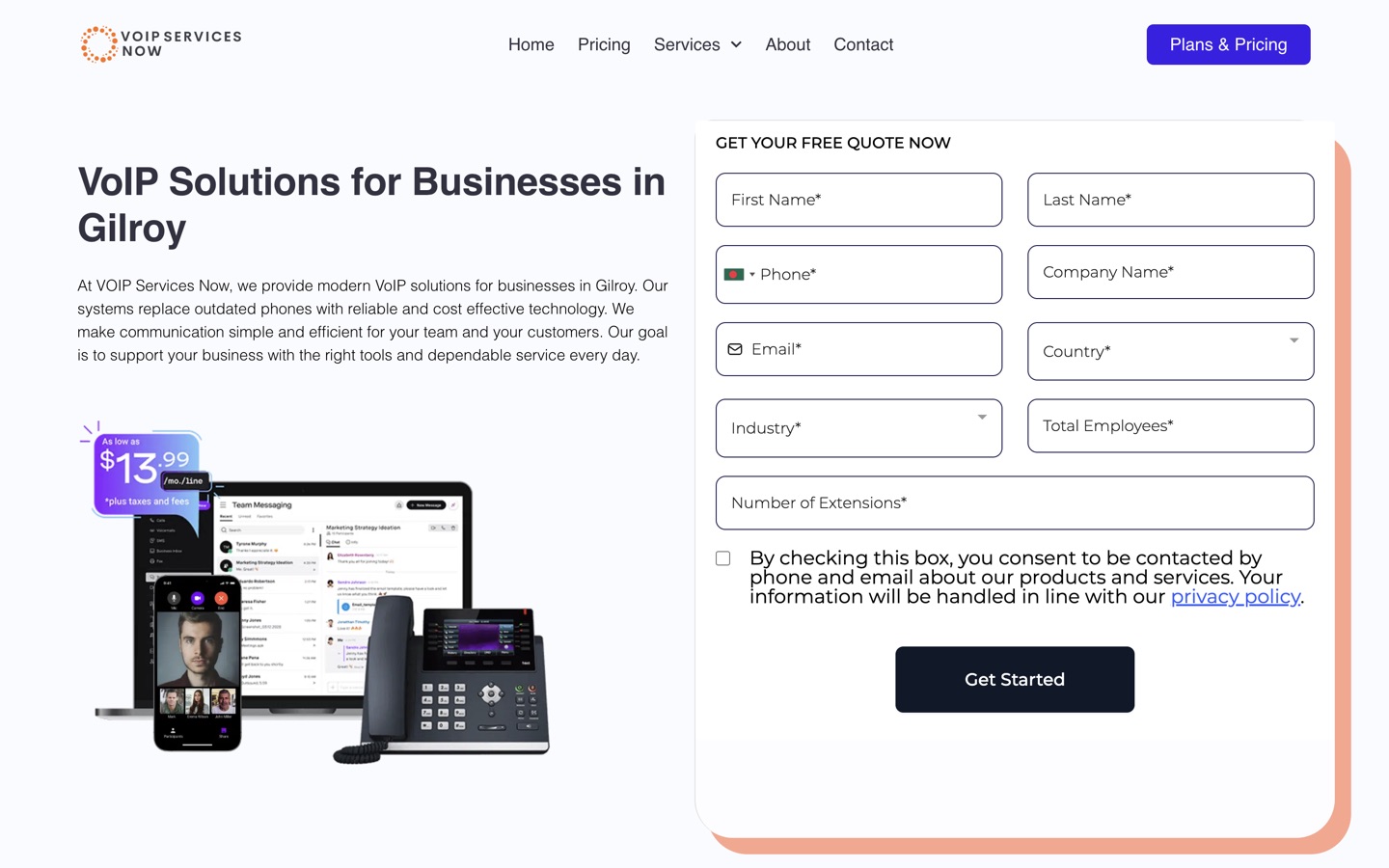
The Gilroy VoIP landing page
Long tail

Where a new domain can actually win

Smaller markets face less competition, so they produce the first rankings and the first enquiries while the head terms are still out of reach.

Early wins fund the harder terms
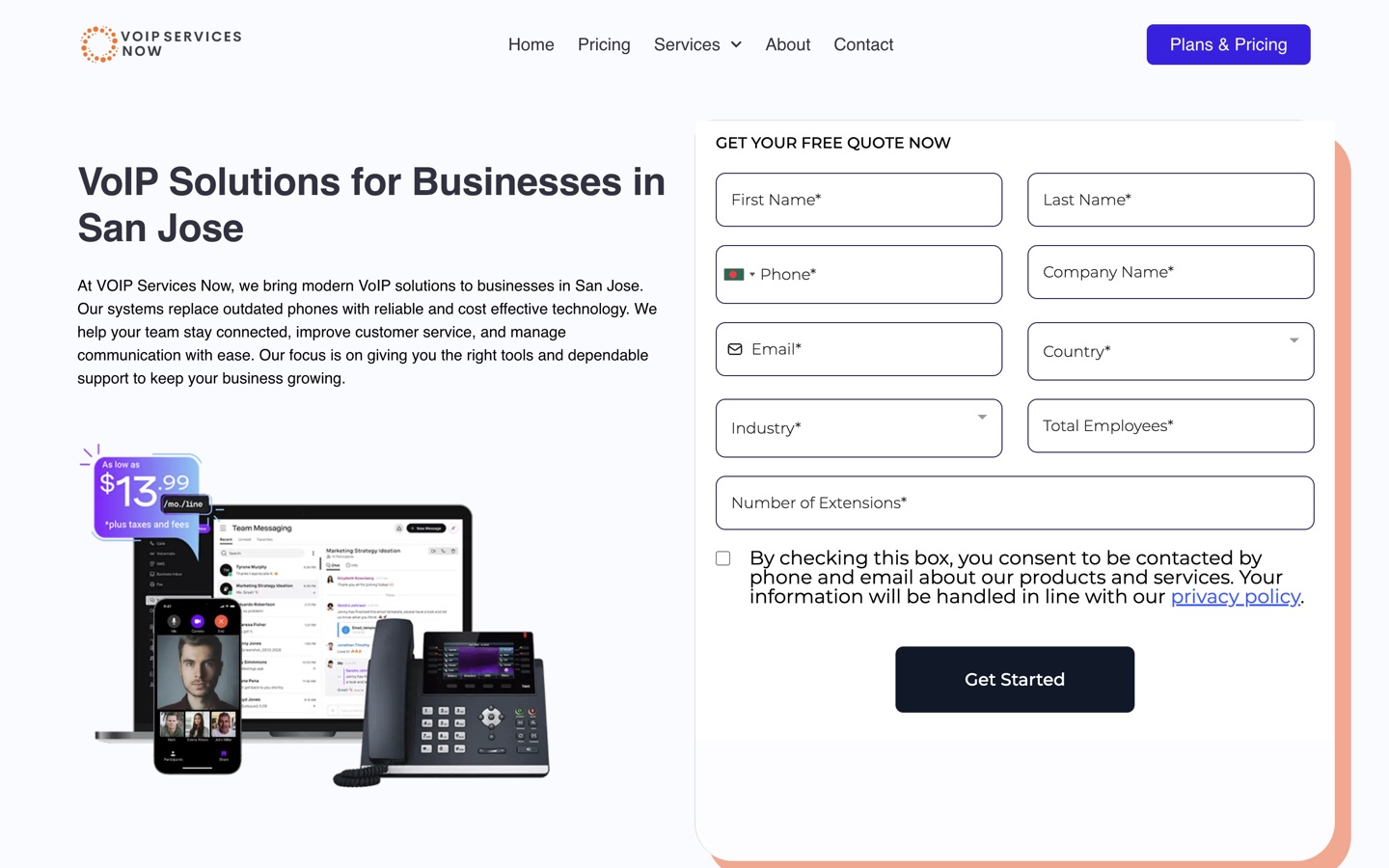
The San Jose VoIP landing page
Scale

Ready for the bigger market

The same structure points at a major metro, so when authority grows the page is already in place rather than being written from scratch.

Positioned before the traffic arrives

The client.

VoIP Services Now is an AI-powered business phone service covering voice, text, video, and 24/7 answering in 1 system, backed by a 30-day money-back guarantee and trusted by over 1,000 local businesses.

30Day guarantee
24/7Support
1,000+Local businesses
At a glance

The engagement, on paper.

Client
VoIP Services Now, a business phone and unified communications provider.
Business stage
Brand new. No website, no search history, no existing brand demand.
Audience
Small and growing US businesses, remote and hybrid teams, call-heavy operations, and local California companies.
Scope
Brand and website creation, UX, landing-page system, product and pricing architecture, performance, conversion design, and SEO.
Design approach
Inspired by proven enterprise conversion patterns, then built custom for this brand.
SEO period
3 months.
Headline result
Target keywords reached Google's top 3 within 3 months.
Project goals

7 goals, in order.

A zero-to-one build has to solve every problem at once. Each goal set up the next.

01

Look established on day 1

Launch with a polished, enterprise-inspired presence so a new company reads as credible on first visit.

02

Move buyers in a sequence

Use a proven page order that carries visitors from promise to features, proof, pricing, FAQ, and action.

03

Explain a complex product

Cover calling, messaging, video, mobility, AI, integrations, hardware, and support without the jargon.

04

Stay fast and easy to browse

Keep the site quick and the navigation focused, even as the product library grew.

05

Earn visibility quickly

Create search-targeted service and location pages capable of ranking inside the first quarter.

06

Make starting low-friction

Give prospects transparent plan options and an obvious, low-commitment way to begin.

07

Build a platform, not a page

Leave a foundation that scales into new products, cities, industries, integrations, and campaigns.

The challenge

New domain. Complex product. Crowded market.

Everything an established brand takes for granted had to be created from nothing.

Zero domain authority

A brand-new domain competing against national telecom providers with years of content and backlinks behind them.

A technical product

VoIP, unified communications, SIP hardware, an offer full of jargon that had to be explained in plain business language.

Entrenched competitors

Buyers compare every new provider against household telecom names. The site had to feel just as credible on first visit.

No conversion data

With no traffic history, the page order could not be optimized from analytics. It had to be right by design from the start.

Many buyer types, 1 site

Software-only users, desk-phone buyers, mobile-first teams, and companies bringing existing hardware all needed a path.

National reach, local wins

The service sells across the US, but early visibility had to come from California markets the brand could realistically win.

Our strategy

The decisions behind the launch.

Six calls that shaped the project, and the reasoning we apply to launching from zero.

Borrow a proven page order instead of inventing one

A new domain has no conversion data to optimise against, so the structure has to be right on day 1. We started from patterns already proven across high-performing SaaS and telecom sites.

Publish pricing rather than gating it

Hidden pricing is the biggest single reason buyers leave this category. Showing tiers up front filters out poor-fit enquiries and speeds up the good ones.

Put SEO in the architecture, not after launch

Every page was assigned a search intent before it was built. Retrofitting that later means rewriting the site, which is why most launches lose their first year.

Win locally before competing nationally

The service sells across the country, but a brand-new domain cannot outrank national providers on day 1. City pages gave it something it could realistically win.

Use progressive disclosure for a deep product

A 40+ feature offer overwhelms a homepage. Expandable sections keep the page scannable for browsers while leaving full depth for researchers.

Let buyers self-select

People pricing a phone system want to compare, not enquire. Tiers plus a comparison table convert better than a contact form for a product this measurable.

Homepage sequence

All 12 steps, in order.

Every section of the homepage has 1 job. This is the full sequence a visitor moves through.

01

Outcome headline

A clear, benefit-led promise: a smart, fast, future-ready business phone system.

02

Scannable benefits

Fast-reading value bullets paired with risk reversal, including the 30-day money-back guarantee.

03

Primary pricing action

A prominent plans and pricing call to action for buyers who are already ready.

04

Collaboration benefits

High-level payoffs for teams: easier conversations, better coverage, less missed business.

05

Expandable feature catalog

A "see more" library so depth is available without burying the casual reader.

06

Problem statement

Naming the pain of outdated phone setups, so the product has something concrete to solve.

07

Premium differentiators

The features competitors do not lead with, including AI answering and mobile-native calling.

08

Plan choices

Three tiers presented side by side so buyers can self-select rather than enquire blind.

09

Industry relevance

Sector examples that let visitors recognise their own business in the offer.

10

Review proof

Social proof placed after the pitch, where hesitation naturally appears.

11

Objection-handling FAQ

Contracts, hardware, porting, texting, security, and setup answered before they become exits.

12

Final call to action

A last, unambiguous ask for visitors who read the whole page.

Product architecture

Every question gets its own page.

Homepage

The full 12-step conversion sequence, from promise through to the final ask.

Pricing

Three tiers with a detailed comparison table and plan buttons that open embedded signup forms.

VoIP phones

A hardware catalog covering desk phones, conference units, DECT systems, accessories, and analog adapters.

Unified communications

The deeper product story for buyers comparing full UCaaS platforms rather than a phone line.

About and contact

Company credibility plus direct routes to sales, with an embedded lead form.

Locations

A hub plus individual city landing pages carrying local language, benefits, FAQs, and pricing actions.

Before vs after

From nothing, to a business.

BeforeAfter
Digital presenceNoneA complete branded web presence
Conversion systemNo landing-page structureA 12-step promise to action journey
Search historyNo organic footprintService, product, FAQ, and local content architecture
Product educationNothing to explain the offerA 78+ feature library, UC page, and hardware catalog
Pricing journeyNo way to compare or start3 tiers, a comparison table, and embedded plan forms
Local relevanceNo local foundationA locations hub plus city-focused landing pages
VisibilityInvisible on launch dayTarget keywords in Google's top 3 within 3 months
The results

Top 3 on Google. In 90 days.

Target keywords reached Google's top 3 within 3 months, early visibility most new domains wait years for.

Top 3Google rankings
3Months from launch
12Homepage conversion steps
40+Features documented
Business impact

What launching this way changes.

The ranking result is client-reported. The effects below describe how a zero-to-one build sets a business up, not separately measured outcomes.

Credible from the first visit

A new company reads as an established one, which matters most when buyers compare it against household telecom names.

The product explains itself

A complex offer is documented well enough that prospects understand it without a sales call.

Buyers self-select a plan

Three clear tiers and a comparison table replace the generic contact form most new providers rely on.

National offer, local wins

City pages give the brand something concrete to rank for while broader terms mature.

Discoverable in quarter 1

Early rankings meant the domain was gaining traction in month 3, not waiting a year for authority.

Room to grow into

The structure expands into new industries, locations, integrations, and campaigns without a rebuild.

Questions

The short version.

What did Rizer build for VoIP Services Now?

The entire digital business, built from nothing:

  • Website: homepage plus dedicated pricing, VoIP phones, unified communications, about, contact, and locations pages.
  • Conversion system: a 12-step homepage sequence ending in plan buttons that open embedded signup forms.
  • Product education: a 40+ feature library covering calling and routing, numbers, voicemail and fax, mobility, meetings, AI answering, and integrations.
  • Hardware catalog: Yealink desk, conference, and DECT models plus Grandstream analog adapters, with bring-your-own-phone guidance.
  • Local SEO: city landing pages for California markets including Monterey, Santa Cruz, and Capitola.
How did a brand-new domain rank so fast?

Because the SEO foundation went in at launch instead of afterwards:

  • Intent mapping: every page was assigned a specific search intent before go-live, no page existed without a job.
  • Local relevance: city pages gave a new brand something national competitors cannot easily match.
  • Long-tail coverage: FAQ content answering real buying questions on contracts, number porting, texting, security, and setup.
  • Internal linking: clean paths from research content to plans and contact.
  • Honest caveat: speed varies by market and competition, a strong foundation removes the self-inflicted delays, not the competition.
Did Rizer copy another company's website?

No. The structure follows proven enterprise conversion patterns; everything else was built for this brand:

  • What's a "pattern": the sequence high-performing SaaS and telecom sites share, promise, proof, plans, feature depth, objection handling, then a clear ask.
  • What was custom: the visual system, all copy, the product and pricing architecture, the hardware catalog, and every local page.
  • Why patterns work: buyers already know how to read them, so attention goes to the offer instead of the navigation.
How do you make a technical product easy to buy?

VoIP is full of jargon most buyers do not want to learn. Our approach:

  • Lead with the outcome: what the business gets, before any mention of SIP, UCaaS, or protocols.
  • Layer the depth: headline benefits on the surface, the full feature library one click down, so neither audience is punished.
  • Answer the buying questions, not the technical ones: contracts, porting, texting rules, security, and setup are what actually stall a decision.
  • Give hardware its own space: buyers who want desk phones need model-level detail; buyers who do not should never have to scroll past it.
Why does the pricing page matter so much?

Because in this category, hidden pricing is the single biggest reason buyers leave:

  • 3 clear tiers: positioned by team size and need rather than by feature-count trivia.
  • A real comparison table: so buyers can see exactly what changes between tiers.
  • Embedded plan forms: selection buttons open a signup form in place, instead of dumping people on a generic contact page.
  • Objections answered nearby: guarantee scope, contract terms, porting, and taxes are covered in the FAQ rather than discovered later.
Can Rizer launch my business from zero?

It's our favourite kind of project, nothing to undo:

  • Best fit: new businesses entering categories where established competitors already rank.
  • What's included: the brand's web identity, a conversion-first site, product and pricing architecture, and the SEO foundation, delivered together, not in phases.
  • Why zero is an advantage: no legacy URLs, no inherited technical debt, no redesign compromises.
  • Next step: book a free call and tell us what you're launching.
Keep exploring

More case studies.

View all
Your turn

No website yet? Even better.

Starting from zero means building it right the first time, brand, conversion system, and search foundation together.